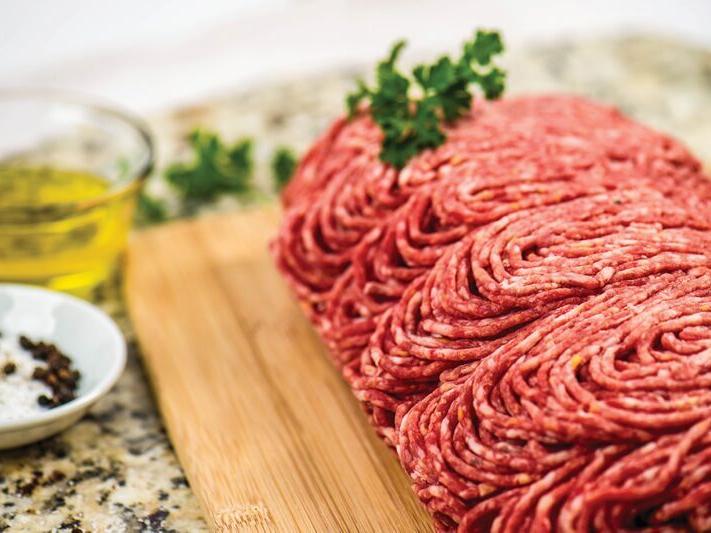
Brown beef in skillet. Drain. Add rice, water, onion and salt. Cover and simmer for 25 minutes. Stir in rest of ingredients and heat until cream cheese is melted. Serve with lots of cheese sprinkled over top.
This recipe is requested when there’s fresh homemade bread on hand.
My husband is a welder. I grew up on a farm and was a farm girl to the core. I’ve been very thankful that we have enough acreage to raise our own meat, eggs, fruit and produce. We love life in the country.
Recipe by Mrs. Nevin (Wilma) Champ, Hegins, Pennsylvania
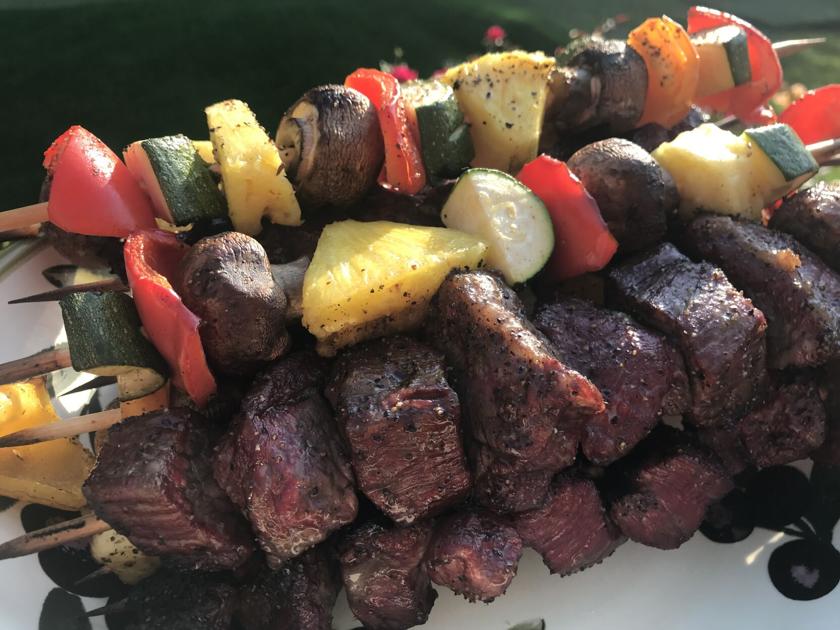
One of my favorite, most festive dishes we prepare on the grill is kabobs, and in this case, beef kabobs. Lots of recipes call for the beef to marinate overnight, but this recipe allows the sauce to be added after everything is cooked. I prepared these kabobs for Father’s Day and they were awesome. The cut of beef I used was a 3.6 lb. tri-tip. The tri-tip is hard to find here in the Midwest, but specifically it is a triangular cut of beef taken from the sirloin, which is the area towards the back of the cow just above the flank and below the tenderloin. It is well marbled, beefy and delicious. For veggies we used small red potatoes, red, yellow and orange peppers, zucchini and mushrooms. We also cubed up some fresh pineapple. We made a bunch of white rice to be served with this. Let’s get started.
Tri-tip chimichurri beef kabobs
Ingredients
3.5 lbs of tri-tip beef, cubed
1 cup extra virgin olive oil
2/3 cup chopped fresh parsley
1/3 cup chopped fresh cilantro
2 tsp dried oregano
3 to 4 cloves of garlic – chopped fine
1 to 2 tsp of fresh cracked black pepper
Juice of 1 lime
First, combine everything other than the beef, veggies and pineapple and whisk together to create the sauce.
Secondly, arrange the cubed beef on wooden skewers which have been soaked in water for an hour or so. The cubes were touching each other but not squished together. If they are squished together they don’t cook right. Also, a pet peeve of mine is seeing the kabobs in the store meat cases with veggies, fruit and meat on the same skewer. That is flawed grilling as these items do not cook at the same pace. Nor is the finishing temperature the same. I boiled the potatoes until fork tender and then set them on a cookie sheet covered in foil. The remaining veggies and pineapple were assembled on skewers. I sprinkled with salt and pepper and placed the meat skewers in the pellet smoker initially at 200 degrees, and smoked them for one hour or so. I then brushed the veggies with olive oil and applied salt and pepper to them as well. I placed the vegetable and pineapple skewers in the smoker and increased the temperature to 375 degrees. I turned the vegetables and meat a couple of times and removed everything when the center of the meat reached 140 degrees. Now, if you have been paying attention you will notice those potatoes are still sitting on the cookie sheet. I sprayed those with olive oil and then broiled them in the oven for ten minutes or so until the skin crisped up a little.
In a large and shallow bowl, take the meat, veggies and pineapple off of the skewers. Now add the crispy potatoes. Lastly, drizzle the chimichurri sauce all over the meat and veggies and mix. Serve immediately with the white rice. This quantity of meat served 10 people. Only you can determine how much veggies and pineapple you need to grill. Enjoy!
A recent investigation by the Environmental Investigation Agency found that some Colombian supermarkets may be selling beef from cattle raised in Chiribiquete National Park.
There are large gaps in the traceability of the beef produced in Colombia.
The Colombian Agricultural Institute is responsible for vaccinating all 28 million head of cattle in Colombia and has important information that could help authorities design effective strategies to prevent cattle ranching in natural protected areas.
Behind some of the beef sold in Colombian supermarkets is a story of deforestation in protected areas and illegal armed groups who benefit from cattle ranching.
The Colombian Agricultural Institute (ICA) is in charge of vaccinating all 28 million head of cattle in Colombia, whether they live in protected or non-protected areas. The ICA has records of the exact locations and names of ranches, villages and cattle owners, the number of cattle owned by each farmer, and the origin and destination of these cattle. This information may be useful in reducing Colombia’s deforestation, illegal cattle ranching, and land grabbing.
The Environmental Investigation Agency (EIA) has documented the links between the deforestation of protected ecosystems, cattle ranching, and the supply chain behind the beef sold in Colombia.
The last link in the chain
The EIA says that a direct supplier of Grupo Éxito and Colsubsidio, two Colombian supermarket companies, purchases between 100 and 300 head of cattle per month from a farm in Chiribiquete National Park, which has been a UNESCO World Heritage Site since 2018.
According to the EIA, the direct supplier of supermarket companies Grupo Éxito and Colsubsidio has a sales capacity of about 2,000 head of cattle per month. Image courtesy of the EIA.
This direct supplier has a relationship with an indirect supplier who, in turn, has a business partner who is responsible for fattening the cattle. The cattle are fattened on an 800-hectare (nearly 2,000-acre) farm in the northern part of Chiribiquete National Park, which is Colombia’s largest national park.
The EIA confirmed that 400 hectares (nearly 1,000 acres) of land, or half of the farm area, was deforested and converted into pasture for the cattle in 2019. According to the EIA, as of September 2020, the owner of the farm has 600 head of cattle and plans to deforest the rest of the land for the same purpose.
Although the owner acknowledges that his farm is within a protected area, he said that Colombia’s national parks administration does “sometimes bother you to not deforest anymore, but they hardly ever do.” Those who really exercise control over the land in the area are the illegal armed groups, according to the owner of the farm. These groups even charge him a “tax” of $2.79 per head of cattle that he owns.
The farm on which the cattle are fattened is located in the northern area of Chiribiquete National Park. The owner claims that he pays the illegal armed groups in the area a “tax” of $2.79 per head of cattle. Image courtesy of the EIA.
Although the owner of the farm did not name anyone specifically, the Colombian army says that “an armed organized group from the extinct FARC [Revolutionary Armed Forces of Colombia]” operates in the area and has about 1,500 active members.
The beef value chain in Colombia is composed of four parts: production, commercialization, transformation, and consumption. The challenge is that “the market cannot differentiate between livestock associated with deforestation, either through [direct deforestation] activity or through land grabbing,” according to a study by the National Wildlife Federation and the University of Wisconsin.
To corroborate the link between this direct supplier and the two supermarket companies, the EIA said that it contacted and visited the slaughterhouse that processes some of the beef for the two companies.
“Given that in Colombia there is no traceability system for livestock that allows the consumer or buyer to know the true origin of the meat, this involuntarily supports the destruction of protected forests and extortion by armed groups and paramilitary organizations responsible for multiple human rights violations in Colombia,” the EIA said.
The challenge of traceability
In May 2019, Grupo Éxito, along with 36 other entities, signed a voluntary agreement in which they pledged to “eliminate deforestation, promote restoration, and thus reduce the carbon footprint of the beef value chain.” In other words, the goal is to guarantee to the final consumer that the beef they purchase in Colombian supermarkets comes from “cattle that — during all its production phases (breeding, raising, and fattening) — have taken place in areas of Colombia that have not had deforestation since January 1, 2011.” According to the document, these policies will apply to direct, indirect, and intermediary suppliers.
According to the ICA, none of the 71 villages partially or completely located in Chiribiquete National Park have reported the vaccination of animals against foot-and-mouth disease and bovine brucellosis. There are no records of cattle in those areas. Image courtesy of the EIA.
Javier Ortiz, director of the Tropical Forest Alliance (TFA), said most of Colombia’s mechanisms for tracing and monitoring livestock are within the ICA and the Colombian Federation of Cattle Ranchers (Fedegan).
Ortiz told Mongabay Latam that the Colombian government has “such a solid monitoring system — so much so that we can have daily deforestation alerts — yet there is not sufficient action.” He said that although he does not know why this is, he believes the solution lies with the government, not private companies or civil society.
In the first phase of the Artemis Campaign, Colombian security forces recovered 120 hectares (about 300 acres) of forests, captured 10 people, and seized vehicles, weapons, and machinery. Image courtesy of Efraín Herrera/Presidency of Colombia.
Although several organizations say the ICA is extremely protective of its information, Mongabay Latam formally requested it and received relevant documents within 15 days.
In the three most deforested departments in the country — Caquetá, Guaviare and Meta — there are almost 5 million head of cattle. The ICA found that tens of thousands of them live inside or very close to protected areas.
The ICA’s director of animal health, Andrés Osejos, told Mongabay Latam that the ICA has been sharing information on the number of cattle in several municipalities with the Attorney General’s Office and the Ministry of Defense. “We have been turning in the little [information] we have to counteract this phenomenon,” Osejos said.
Osejos added that the role of the ICA is not to combat deforestation; rather, it is to vaccinate animals to avoid putting public health and the economy at risk.
The Artemis Campaign aims to fight deforestation in all of Colombia’s natural parks to protect biodiversity. Image courtesy of Efraín Herrera/Presidency of Colombia.Map of deforestation between 2016 and 2020 in Sierra de la Macarena National Park and Chiribiquete National Park. Image courtesy of the EIA.
Mongabay Latam asked Osejos whether the ICA knows exactly who is deforesting land outside of the agricultural frontier. “As you say it, it sounds like ‘you know and don’t do anything,’ but what we have is a health program, I repeat. When the vaccinator goes to a department, that person does not know with certainty whether that place is a natural park or not. That is learned later, upon seeing satellite images, maps, and other information,” Osejos said.
When Mongabay Latam asked Osejos whether the ICA has considered that this information may be relevant to help stop deforestation, he said the agency has very little time to work on the issue of deforestation because of its day-to-day work. However, Osejos said that during work meetings, the ICA does provide the information on deforestation that it has. He added that government entities can also request this information.
On the week of Jan. 25, 2021, Global Forest Watch issued 144,847 deforestation alerts in two areas that include sections in and around Chiribiquete National Park. Image courtesy of Global Forest Watch.
Deforestation and military operations
Chiribiquete National Park spans 4.3 million hectares (10.6 million acres) and is one of the oldest archaeological sites in the Amazon Basin; it contains ancient rock art on its sheer stone walls, earning it the nickname “the Sistine Chapel of the Amazon.” Scientists have found evidence that this dense rainforest has been inhabited for at least 12,600 years. Not only is Chiribiquete National Park a strategic site for ecological connectivity with the Andes, but it is also a key to understanding the history of human settlement in South America.
None of this has been sufficient to stop the advancement of chainsaws, highways and cattle. The Institute of Hydrology, Meteorology and Environmental Studies (IDEAM) has recorded 5,315 hectares (13,134 acres) of deforestation in Chiribiquete National Park since 2000. About 41% of this forest loss occurred in 2018 alone.
About 63% of the deforestation in Colombia between 2000 and 2018 occurred in just five departments: Caquetá, Meta, Guaviare, Antioquia and Putumayo. Image courtesy of the National Planning Department (DNP) of Colombia.
Additionally, a recent report from the Monitoring of the Andean Amazon Project (MAAP) warned that Chiribiquete National Park lost more than 1,000 hectares (about 2,500 acres) between September 2020 and February 2021. “Much of this deforestation appears to be associated with the conversion of primary forest to illegal cattle pasture,” the report says.
Another report, the “National Policy for Deforestation Control and Sustainable Management of Forests” from the National Economic and Social Policy Council, says cattle ranching is responsible for 50% of the total amount of newly used land in Colombia between 2005 and 2012.
According to IDEAM, 2,500 hectares (nearly 6,200 acres) were deforested in Chiribiquete National Park during 2020 and so far in 2021. Image courtesy of IDEAM.
The report also says that conservation strategies have not succeeded in reducing settlement or the development of prohibited activities because of “the low coordination between national guidelines and local realities in terms of environmental land use planning, informality in land occupation, and agricultural production that does not take the aptitude of the soil into account, causing environmental harm and social inequity.”
According to the Colombian military, nine operations against deforestation have occurred between April 2019 and February 2021 as part of the Artemis Campaign (Campaña Artemisa). Four of these operations took place in Chiribiquete National Park, leading to the recovery of more than 5,800 hectares (14,330 acres).
There are currently 22,300 members of the security forces (including from the army, navy and police) dedicated to the “protection of water, biodiversity and the environment” throughout Colombia. The military says a total of 12,358 hectares (30,537 acres) of land in Colombia’s natural parks have been recovered. Additionally, tens of thousands of pounds of illegal items have been seized, including timber, fish, and raw materials used in the processing of narcotics.
Despite this, the EIA discovered the falsification of livestock transportation records, the sale of timber from protected areas, and a lack of coordination between government entities. The EIA recommends “a structural reform to care for many of these problems, starting with declaring the principles of transparency and livestock traceability to be in the public interest.”
Banner image: According to the EIA, the direct supplier of supermarket companies Grupo Éxito and Colsubsidio has a sales capacity of about 2,000 head of cattle per month. Image courtesy of the EIA.
This article was first reported by Mongabay’s Latam team and published here on our Latam site on May 27, 2021.
The fifth annual Beef Feedlot Short Course, organized and hosted by the Iowa Beef Center at Iowa State University, is set for Aug. 3 to 5 at the Hansen Agriculture Student Learning Center in Ames.
Erika Lundy-Woolfolk, beef specialist with Iowa State University Extension and Outreach, says the goal of the event is to optimize participant learning through exposure to new technology, research and best management practices.
"From our initial planning for the first event in 2017, we've focused on providing content in a small-group setting with a mix of hands-on and classroom instruction," she says. "The short course is designed for feedlot managers, employees and consultants, and past attendees have appreciated that focus."
Content-specific portions of the short course will be held at the Iowa State Beef Nutrition Farm near Ames and Couser Cattle Co. in Nevada, Iowa.
The program runs from 12:30 p.m. Aug. 3 through noon Aug. 5. For questions on the content, contact Lundy-Woolfolk at [email protected] or Dan Loy, Iowa Beef Center director, at [email protected].
What’s on the agenda
The topics include:
• bunk management and the basics of starting cattle on feed
• feed-mixing demonstration and evaluation
• feedlot nutrition
• managing and identifying cattle health issues in the feedlot
• facility design and cattle handling
• data management
Who is speaking
The presenters include:
• Bill Couser, Couser Cattle Co., Nevada, Iowa
• Garland Dahlke, associate scientist, Iowa Beef Center, Iowa State University
• Grant Dewell, beef veterinarian, ISU Extension and Outreach
• Terry Engelken, associate professor, Veterinary Diagnostic and Production Animal Medicine, ISU
• Lee Schulz, Extension livestock economist and associate professor, economics, ISU
• Dan Thomson, professor and animal science department chair, ISU
The registration fee, $350 per person, includes program materials and meals listed on the agenda. The registration deadline is midnight July 27, or when the course limit of 30 is reached. All registrations must be made online.
See the short course website for registration information, requirements and links at Beef Feedlot Short Course.
Participants are responsible for making their own lodging arrangements, if needed. A block of rooms is available at Comfort Inn & Suites ISU, 603 S 16th St., Ames. Book by phone at 515-663-9555 or book online.
Source: ISU Extension and Outreach, which is responsible for the information provided and is wholly owned by the source. Informa Business Media and its subsidiaries aren't responsible for any of the content contained in this information asset.
Happy cows living in sanctuaries wander, swing their tails, form strong friendships, groom each other, enjoy intellectual stimulation, prefer salty and sweet foods, empathize with each other, and take care of herd members who are sick. The vast majority of cows in the United States, meanwhile—about 41 million cows were being raised for beef and dairy in 2019—are unable to enjoy most of these activities, especially as they only live to be about 14 to 16 months old, less than a tenth of the expected lifespan of a cow living in an animal sanctuary. But how did cattle farming become like this, and what might the future hold for beef consumption in the U.S.?
In the 20th century, meat consumption has also been heavily tied to farming innovations. Innovations in industrial agriculture changed how animals were raised for the market. For example, after World War II, farmers began using antibiotics to prevent the spread of disease among animals living too close together. Cows spend their lives in cramped and unsanitary conditions where they must often endure the pain of having their tails removed.
The resulting efficiency of the meat production system also came with a price of hazardous conditions for low-wage workers. Slaughterhouses tend to hire Black, Latino, Asian, and both undocumented and documented immigrant workers for dangerous, trauma-inducing, non-unionized work. Farmers who raise cattle that are sent to slaughter also struggle to make money from their labor.
Whether eating chickens, cows, or pigs, humans became further and further removed from the individual animals they were eating—both physically and in terms of their knowledge, writes Connie Johnston in Political Ecologies of Meat.
How Much Beef Does the Average American Eat?
The average American eats about 55 pounds of beef per year, based on 2019 USDA Food Availability data, a proxy for food consumption. Since the USDA began keeping statistics, the average amount of beef consumed per capita rose from 32 pounds per person in 1932 to 88.8 pounds in 1976 and has since steadily fallen.
Meat Consumption in the U.S. Over Time
Meat consumption in the U.S. has roughly mirrored the rise and fall of beef consumption in the last century, with a low of 76.9 pounds of red meat per person in 1935 rising to a high of 136.1 pounds in 1971. From 1971 to 2019 Americans reduced their red meat intake to about 105.2 pounds per person.
The graph below shows the per capita consumption of beef and red meat in the U.S. from 2009 to 2019, using data from the USDA.
In 2019, beef comprised more than half of all red meat consumption in the U.S.
Which U.S. State Consumes the Most Beef?
While the USDA calculates beef consumption per capita nationally, it does not hold such data by state. Among the five states that the U.S. Bureau of Labor Statistics tracks, Texans spent the most on beef products, and more than the average U.S. resident. Hamburger consumption in Nevada has been found to be higher than in most other states. Meanwhile, among cities with the highest consumption of meat in the U.S., Philadelphia has been ranked first.
Which Country Consumes the Most Beef?
Argentina outpaces all other countries in beef and veal consumption per person, at 36.9 kilograms (81.4 pounds) annually, compared to the U.S.’s second-place consumption rate of 26.1 kilograms (57.5 pounds).
Why Do Americans Eat So Much Beef?
The domestication of animals for meat arrived in what is now the U.S. with settler colonialism and is directly linked to the displacement and genocide of Indigenous populations, and the decimation of bison. Meat-eating in Europe had been reserved for wealthy people. Colonists brought cows, pigs, chickens, and other livestock from Europe to raise on land stolen from `Indigenous people. As it became more accessible and affordable to more and more settlers, beef became a staple of the American diet.
Since the 19th century, meat production in the U.S. has become increasingly industrialized, resulting in factory farms that produce fast-growing cows who live in crowded and restricted spaces. Cows are fed corn, soy, and grains and are given hormones that cause them to grow quickly. From those farms, slaughterers and processors turn the cows into different forms of meat which are prepared and packaged for grocery retail and food service—from ground beef to steaks: dried, frozen, canned and chilled.
Is Beef Consumption Increasing or Decreasing?
Since the late 1970s, beef consumption in the U.S. has declined, in part due to consumer concerns about the health impacts of eating too much red meat. Instead, Americans are eating the more affordable chicken.
Beef Consumption After the Pandemic
As COVID-19 spread—and killed at least 20 workers from meatpacking plants in the Spring of 2020 before ultimately causing the deaths of a further 600,000 people in the U.S.—beef consumption seems to have fallen to 13.2 billion pounds nationally, down from 13.9 billion in 2019. People also began purchasing more of their beef from the grocery store than from restaurants and other food service venues.
How Much Beef Is Wasted in the U.S.?
About one-third of food is wasted in the U.S., and meat tops the list by value. In 2010, 161.6 billion dollars’ worth of food went uneaten, of which about 30 percent was meat, poultry, and fish. Vegetables (19 percent) and dairy products (17 percent) were the other top contenders. Given the dominance of beef consumption in the meat industry, billions of pounds of beef are likely wasted in the U.S. each year.
There are many ways that beef is wasted. It can be damaged due to packaging, storage, spoilage, or may not pass food safety inspections. It can also be overstocked at stores or not be purchased because of how it looks to grocery store shoppers. At home, people may overestimate how much food they need and make too much food, or they may throw away uneaten food because of food recalls, or concerns about whether the food is expired.
With reduced farming of cows that are given large amounts of antibiotics, leading to spreading antibiotic resistance in bacteria, people might have a better chance of surviving bacterial infections. Less corn, soy, and other feed would be raised for cows, the amount of methane and carbon dioxide pollution would be reduced, and water in rivers and throughout ecosystems would be replenished. Biodiversity might also increase as a result of reduced denuding of land for cattle grazing.
Finally, there would be a significant impact on the food system. People could sink their teeth into a falafel sandwich with greater assurance that their proteins are not directly linked to slavery, compared to if they had chosen to eat a typical cheesesteak or hamburger.
What Can You Do To Help?
Give yourself a pat on the back for taking the time to inform yourself about the consumption of dairy and beef in the U.S. Here are some additional resources as you consider how you can help solve some of the ethical, social, environmental, and political problems raised in this article:
Food Empowerment Project’s Food Chain Newsletter offers an overview of the beef industry, from the life of the cow to the environmental and human costs.
Heed the perspectives of Black and Indigenous activists seeking to decolonize the food system, as written about in this article.
Are we missing something? Let us know how we can make this article better.
The Road Ahead
The story of how beef is consumed in the U.S. often omits the experiences of cows or the people who labored to raise and slaughter them. Beef has been separated from its origins by a powerful supply system, which activists are seeking to undo because of its harms to communities, animals, and the environment.
SPRINGDALE, ARK. – Tyson Foods Inc. announced its Finney County, Kan., beef plant’s water conservation efforts resulted in the facility being the first in the industry to be certified as part of the Alliance for Water Stewardship by meeting standards verified by SCS Global Services (SCS), a third-party certification company. The certification standards implemented indicate the plant’s successful achievement of water stewardship requirements that are measured by water governance, quality, sustainable balance, safety and sanitation.
By reducing its water intensity from 0.90 gallons per lb (of beef produced) to 0.85 gallons, the plant’s water efficiency improved by 4.8% from 2019 to 2020, while reducing water usage companywide by 7.7% since 2015.
Dennis Jones, complex manager at the Finney County facility, said the certification is affirmation of the company’s planned efforts to conserve natural resources.
“We are proud of our work to implement water stewardship practices in Finney County and our recent certification under the Alliance for Water Stewardship standard is a true testament to our commitment of securing the future of water at the plant and in the community,” he said. “This work is extremely important and we aim to safeguard water resources for residents through our efforts and contribute to the long-term development of the local community.”
The company developed and implemented its water stewardship program after interpreting data to identify water challenges and then evaluating the results of the applied stewardship plan in terms of water efficiency and overall usage. The campaign involved working with business and community members as well as government officials to establish water conservation goals while focusing specifically on monitoring water usage, wastewater management and minimizing water pumped from the county’s aquifer to conserve it for essential community purposes.
“Making clean water available for drinking and washing is at the forefront of our safety efforts and will continue to be a priority for all Tyson locations,” the company said.
“AWS certification distinguishes Tyson Foods as a global leader in water stewardship and demonstrates its commitment to excellence in water governance and conservation,” said Rae Mindock, SCS Global Services’ program manager of water certification.
The U.S. Bureau of Labor Statistics' latest official data says in April 2021, the average price of a pound of lean ground beef climbed to a whopping $5.97 per pound. It's no secret that in the past year, we've seen all kinds of economic turmoil sending us into a season of inflation, when the price of everything is soaring.
If you and your family are not ready to turn vegetarian — nor are you prepared to pay a king's ransom for quality hamburger — you do have another option: Get creative. OK, maybe a little sneaky, too.
But first, let's talk turkey — I mean, ground beef. The really lean option of ground beef, 93/7, is not easy to prepare well. That's because there's not enough fat in it to turn out juicy, delicious fare. Super lean ground beef requires careful seasoning as well as careful cooking.
Let's say that you, like me, prefer organic, 90/10 lean ground beef. Yesterday I paid $5 per pound at my supermarket, on sale. Yikes! But I didn't really pay that. My effective cost is more like $3.24 per pound. How? Please don't tell a soul: I stretch it. I take the best quality ground beef and then "extend" it by at least one-third. So whatever the price in the store, I mentally reduce it by 33% to get my effective cost.
How to stretch ground beef
Sounds horrible, I know. But it's not. By mixing in something with the ground beef to make it go further, I get results that are so much better than the beef alone. I'm always doctoring, seasoning, adding this or that depending on what I'm making.
Take meatloaf, for example. I wouldn't be surprised if just the word "meatloaf" makes you respond with a resounding, "Yuck!" That's because a brick of ground beef stuck in the oven with a little salt and pepper is going to turn out dry as shoe leather, and about as tasty.
But take that same amount of ground beef and mix it with a few well-chosen ingredients, and then bake it up or put it on the grill. You are going to be amazed. Even your children are going to say it's great and ask you to do that again. And again.
Just don't be so anxious to tell your secrets. There's something about adding stuff to ground beef that grosses people out.
Rice
When browning ground beef for anything like tacos, chili or sloppy Joes, add one cup of cooked rice for every pound of meat, just after draining the grease. Your family will never know. The rice (brown or white) takes the seasoning very well so that it looks like it is all ground beef.
Potato
Add grated potato or dry potato flakes to hamburger meat for any Mexican dish like tacos or chili.
Bulgar wheat
Cook it first in water until soft according to label instructions. Then add to any recipe calling for ground beef and tomato sauce, reducing the amount of ground beef you use to accommodate the addition of the bulgur wheat. Shhh! I've been known to go 50/50 cooked bulgur to ground beef. That means 1/2 pound ground beef where the recipe calls for 1 pound.
Pureed vegetables
Roast them first, and then puree in the food processor or blender. Add one cup per pound of ground beef.
Fillers
Add 1/2 cup of precooked lentils, kasha, quinoa or beans to the raw ground beef. Now cook it just as if you would if it were all ground beef.
Stale bread, crackers
Tear up old bread or crackers into crumbs. Add an egg and spices to make meatballs and burgers.
Turkey
Ground turkey is very lean and often lacking in flavor. And it's dry. Mix 50/50 with ground beef for fabulous results.
Meatloaf
You can find my family's all-time favorite recipe for meatloaf at everydaycheapskate.com/groundbeef. This is the way your grandma made it; trust me on this. This is the recipe that made the house smell great, that went perfectly with mashed potatoes and that you knew you could eat every day of your life and never get tired of it.
This is the recipe that will make your family hope and pray there will be leftovers for tomorrow. If you follow this recipe well, the kids will never know you used bread, carrots and cheese to turn 1 1/2 pounds of ground beef into something closer to 3 pounds!
MILLS COUNTY, IOWA – Construction is set to begin in spring of 2022 on the new federally inspected Cattlemen’s Heritage beef processing facility in Mills County, Iowa. The $325 million plant should be operational by late 2023 and is expected to process 1,500 head a day and employ 750 workers.
Cattlemen’s Heritage is a newly formed investor-owned corporation led by Chad Tentinger, founder and owner of TenCorp Inc., a cattle industry construction firm. Tentinger is also an Iowa cattle producer. He said the goal of Cattlemen’s Heritage is to help young farmers get started in the cattle business.
“Creating more economic value to Iowa agriculture and the state’s livestock industry will help bring the next generation back to the farm,” said Iowa Secretary of Agriculture Mike Naig. “This is important for the success and sustainability of the ag community and our state’s economy.”
The plant will be located on the Mills-Pottawattamie County line in western Iowa. During the construction portion, the project will provide more than 3,300 jobs in the area and will have an economic impact of $6.4 million.
“This facility will provide another market access for Iowa’s cattle producers with hopes of boosting cattle prices through competition and giving the state a needed economic boost for agriculture and the local area,” said Matt Deppe, chief executive officer of the Iowa Cattlemen’s Association. “We look forward to having continued conversations with the Cattlemen’s Heritage group and how they can help our state’s cattle producers.”
At startup in 2023, the plant will harvest about 800 head per day for the first several months before ramping up to full capacity at 1,500 head per day by the end of the first year.
INDIANA – Merkley & Sons Packing Co. of Jasper, is voluntarily recalling certain ground beef products because of possible E. coli contamination.
The company says the recall involves 1-pound and 5-pound packages of “Ground Beef, 80% Lean,” and is out of an abundance of caution after product tracing.
The Indiana State Board of Animal Health says the impacted products were sold in the following retail outlets between June 7 and June 24, 2021:
Big Peach Produce Stand – Bruceville, IN
Birdseye Conservation Club – Birdseye, IN
Buck’s Produce – Marengo, IN
Discount Grocery – Loogootee, IN
Dutch Pantry – Vincennes, IN
Fast Eddies – French Lick, IN
IGA – Loogootee, IN
Jay C – Washington, IN
Kalb’s – Dubois, IN
Merkley and Sons Packing Company retail store – Jasper, IN
Nicholson Valley Grocery – Dubois, IN
Shepherds Loft – Montgomery, IN
Spud Food Mart – Jasper, IN
Sunny’s Celestine – Celestine, IN
No illness has been associated with these products.
“Food safety and quality is our number one priority. Providing our customers with safe, wholesome, and quality products is a responsibility we take very seriously. We feed our families the very same product we provide to your families. We remain committed to providing timely communication and transparency to all of our customers,” said Merkley and Sons in a statement.
Consumers who possess recalled products should not consume them. To receive a refund or exchange, return the unused portions to the retail location. Consumers should also check their freezers for unused portions.
For any questions, the business says to call 812-482-7020.
A survey on ground beef in Scotland has found low levels of Campylobacter, Salmonella and Shiga toxin-producing E. coli (STEC).
The work, funded by Food Standards Scotland, was done in 2019 with 1,009 samples of fresh ground beef, also known as minced beef, on retail sale across the country. For 33 samples country of origin was unknown. Of the rest, all except three were labeled as coming from the UK and Ireland.
It looked at the frequency of Campylobacter, Salmonella and STEC findings, and two process hygiene indicator organisms: counts of generic E. coli and Aerobic Colony Count (ACC). Levels of antimicrobial resistance in detected pathogens and generic E. coli were also assessed.
Only one sample was positive for Campylobacter and Salmonella was detected three times; Salmonella Mbandaka twice and Salmonella Dublin once.
E. coli results
In total, 35 samples were confirmed as STEC positive and only three were E. coli O157:H7. Overall, 226 presumptive samples were identified but this is not the same as finding viable STEC bacteria, according to the report.
Twenty two different serotypes featured among the 35 STEC isolates. With four each, E. coli O113:H4 and E. coli O84:H20 were the most common.
Two of the O157:H7 STEC study isolates were similar to three Scottish clinical strains from a UK outbreak of E. coli O157 phage type (PT) 21/28. Mince isolates matched clinical ones. An outbreak investigation concluded the source of infection was most likely Scottish cattle.
The study found no significant differences between confirmed STEC and all factors such as season, geographical location, or retailer type.
Most samples had levels of generic E. coli below the limit of detection. ACC was above the limit of detection in most tests.
The majority of isolates were susceptible to all the antibiotics they were tested against. Evidence for AMR was identified in 12 of 151 isolates tested. No isolates were resistant to any critically important antimicrobials.
Assessing scale of problem
Ground beef sold in Scotland is not intended to be eaten raw or less than thoroughly cooked, also known as rare.
Dr. Marianne James, head of risk assessment at Food Standards Scotland, said the levels of microbiological quality were encouraging, and in line with past studies in other countries.
“The levels of AMR in beef mince were low, and any resistance found was to commonly used, first line antibiotics. This provides some reassurance that fresh beef mince on retail sale in Scotland is unlikely to currently be a major foodborne route for transmission from cattle to humans of AMR to critically important antimicrobials. Against that background, adherence to cooking instructions on all beef mince packaging and strict hygiene when handling raw mince, remains important to avoid any potential illness associated with the product,” she said.
FSS worked with Scotland’s Rural College on the project and George Gunn, head of Veterinary Epidemiology at SRUC, said: “Our survey provided a baseline understanding of the microbiological status of fresh minced beef on retail sale in Scotland while also identifying gaps in our knowledge and the evidence base.”
(To sign up for a free subscription to Food Safety News, click here)
In efforts to put some much-needed eyes on Japan’s agriculture and farming industry after taking a big hit from the COVID-19 pandemic, Hyotanya is looking to get people talking about Japan’s history of beef and art.
Merging the two worlds together, the Shiga-based Omigyu beef shabu-shabu restaurant along with creative firm Kaya is highlighting Hokusai‘s famous works from his Thirty-six Views of Mount Fuji series of woodblock prints, combining it with the country’s highest-ranked A5 grade beef — it’s ukiyo-e-meets-wagyu.
Each 700g pack of beef comes framed with the artwork, where Hyotanya recommends replacing the empty space where the beef was with red paper after consuming. Priced at ¥13,000 JPY (approximately $108 USD), those interested in learning more can head over to the Hitotema Art Beef Gallery page.
Bandits Xavier Spann, left, and Reggan Northrup take down Beef's DeShawn Jones during the Sioux City Bandits vs the Omaha Beef arena football action at the Tyson Events Center in Sioux City, Iowa, Saturday, June 26, 2021.
FREMONT — Spencer Walahoski of Overton finished in second place in the Senior Division of the Nebraska Beef Ambassador Contest.
Support Local Journalism
Your subscription makes our reporting possible.
The Nebraska Beef Ambassador contest was June 9 in Fremont. Contestants prepared an issues response and competed in a media interview. The Nebraska Beef Ambassador Contest provides an opportunity for youths to become spokesperson and future leaders in the beef industry.
Contestants participated in a beef advocacy workshop, which focused on using advocacy to share their personal story. In mock interviews, the contestants learned how to engage in a successful media interview.
As an old-timer, I have to say I’m looking forward to the Rice-and-Beef special at the top of the Arkansas Razorbacks’ football menu this fall.
Sam Pittman’s Hogs open the season by hosting Rice at 1 p.m. on Sept. 4 at Reynolds Razorback Stadium in what no doubt will be blistering heat.
The folks sitting on the east side will probably be hot enough to actually boil rice before the game ends during the heat of the day around 4 or 4:30 p.m.
The game is not scheduled to be televised, but rather streamed on ESPN3, which begs the question that Arkansas Democrat-Gazette sports editor Wally Hall first asked, why kick this game off at 1 p.m. instead of a more reasonable 6 or 7 p.m.?
Even an 11 a.m. kickoff would be better. Since it’s being streamed rather than televised, the game is not occupying a television time slot. There shouldn’t be a problem staging it at a more reasonable time of the day.
While Arkansas will be allowed to have full attendance after a year of Covid-19 crowd restrictions, it might not be until the second playing date that Hog fans fill up Razorback Stadium.
If — like the little old lady in the ancient Wendy’s commercials of the 1980s — you’re wondering “Where’s the Beef,” that comes on Sept. 11 at a much more reasonable 6 p.m. when the dreaded Texas Longhorns visit Razorback Stadium for an ESPN-televised game.
Few under the age of 45 really get the significance of playing Texas takes on for those of us who lived the rivalry 365 days of the year when the Hogs and Horns were Southwest Conference members.
While there were other good teams in the SWC, from the dawn of the conference until Arkansas exited the league to join the SEC after the 1991 football season, the Razorbacks really only took a back seat to the Longhorns in terms of prestige.
Certainly it meant something to whip Houston in the late 1970s, SMU when they cheated their way into the top 10 in the early 1980s, and Texas A&M in the late 1980s, but to truly gain respect nationally, the Hogs had to beat Texas to reap the plaudits Hog fans desperately desired.
You see, Arkansas and its fans felt like the Hog-hatted stepchildren of the SWC, being the only member of the league from outside the bounds of the Lone Star State, or at least at times we felt like it.
It was us against all of them, but the biggest them was the Longhorns. Beating Texas was always the key to Arkansas gaining national respect. It was a litmus-test game. Beat Texas and you had accomplished something on no uncertain terms.
On the whole, the Razorbacks had their way with the other SWC opponents. Even though Texas A&M has won their last nine games against the Hogs in SEC play, the Razorbacks still hold a 41-33-3 advantage over the Aggies in the all-time series.
Of all the old SWC opponents, only Texas holds a series advantage over the Razorbacks, and it’s so lopsided at 56-22 that the Hogs will never catch them.
While the Longhorns have had some good years — most notably their national championship in 2005-06 — since Arkansas departed for the SEC 30 years ago, Texas isn’t the juggernaut it once was. Oklahoma carries that banner now in the Big 12, but most feel the Longhorns are a sleeping giant.
What no one knows is whether first-year head coach Steve Sarkisian can rouse the Steers from their slumber. Nick Saban gave him a lifeline at Alabama to rekindle his career as the Crimson Tide’s offensive coordinator after his alcoholism imploded his regime at USC.
D-Shawn Jamison, Texas Longhorns Orange White Game / Photo: TexasSports.com
Sarkisian masterminded one of the great offenses in the history of college football last season as the Crimson Tide practically waltzed their way to an undefeated national title.
Many think he will ignite a fire under the Longhorns quickly. The Longhorns were ranked No. 19 at the end of Tom Herman’s tenure in the final poll of 2020, and in a preseason poll published by NCAA.com, Sark’s first squad comes in at No. 18.
It might just be summertime delusions, but I’m feeling a good old-fashioned Razorback upset brewing for the Texas game.
The game is early to the Hogs’ benefit. They won’t be beat up from SEC play yet, which was the downfall to a promising start last season. Arkansas just did not have the depth last year to survive a grueling 10-game, all-SEC schedule.
Covid-19 struggles kept the Hogs from upending LSU last year, and the in-game injury to All-SEC linebacker Grant Morgan turned the tide in what became a shootout against Missouri.
Depth has always been and probably will always be an issue with the Razorbacks, but on the second playing date of the season, Arkansas ought to be able to give the Longhorns their best shot.
Texas will also still be adjusting to its new coaching staff. If there is anytime to catch the Longhorns, it’s early in the season before the players have complete buy-in to Sark’s system and coaches.
A victory in that game would be exactly what Pittman and his staff needs to build on not only with the 2021 team but also his entire program. A victory over Texas would be an attention-grabber for the Razorbacks.
Again, it might be summertime delusion, but I think Barry Odom’s second-year Hog defense will be able to frustrate the Longhorns just enough for the Razorbacks to pull off the upset.
Evidently, I’m not the only one high on the Hogs. Football publishing guru Phil Steele named three Hogs to his All-American lists earlier in the week.
Treylon Burks garnered first-team honors at wide receiver, while the aforementioned Morgan and safety Jalen Catalon garnered second-team All-American accolades.
All three of them also made Steele’s first-team All-SEC squad with linebacker Bumper Pool (second team), offensive lineman Myron Cunningham (third team), long snapper Jordan Silver (third team), running back Trelon Smith (fourth team) and offensive lineman Ricky Stromberg (fourth team) also being acknowledged.
A massive “COVID-friendly” beef processing facility is planned for southwest Iowa that promises to create hundreds of jobs and boost the region’s economy by more than a billion dollars a year.
Project developer Chad Tentinger is founder and owner of TenCorp, a cattle industry construction firm with offices in Des Moines and Marcus. The newly-formed Cattlemen’s Heritage Beef will construct the $325 million plant in Mills County.
“We’ll be the first state-of-the-art new facility built in western Iowa in more than two generations,” Tentinger says. “We will employ up to 750 workers and our estimated annual economic impact is $1.1 billion to the local economy.”
Tentinger says the plant will fill a “critical gap” between conglomerates and under-sized lockers that aren’t equipped to meet the needs of consumers, producers or retailers. He notes several years of weak cattle markets and strong retail prices demonstrate that now is the ideal time to build.
Tentinger says, “What we’ve seen over the last two years with, obviously, interruptions in the economy has shown that over the last 20 years, we have added capacity through feedlots in the Midwest with high-quality cattle and we just simply have not kept up with the capacity to process those cattle.”
A news release says workers at the plant will have an average annual wage of $55,000, plus benefits. At capacity, Tentinger says the facility will be able to process up to 15-hundred head of cattle per day.
Tentinger says, “I think a large portion will come from Iowa but I think, just based on location, obviously, we will draw out of eastern Nebraska and eastern South Dakota also.” The coronavirus outbreak forced the temporary closure of some Iowa meatpacking plants last year with deadly outbreaks among the workforce. Tentinger says this plant will be built with the advantage of having seen what’s happened with COVID-19.
“Larger spacing, more room inside the plant, layout, taking all of that into consideration, with state-of-the-art new equipment, new spacing, new requirements,” he says. “It will be the first plant built with COVID-friendly in mind.”
The facility will be built along Interstate 29 in Mills County near the Pottawattamie County line and south of Council Bluffs. Construction is to begin in the spring of 2022 with the opening in the winter of 2023.
Governor Kim Reynolds released a statement this morning: “Iowa has a reputation for producing safe, reliable, and quality products that feed our nation and a growing world population,” Reynolds said. “TenCorp, Inc.’s new facility will add greater stability, processing capacity, and value to our state’s agriculture industry. I am excited about this project and what it means not only for Iowa’s cattle industry, but the continued growth and expansion of Iowa agriculture.”
Prepared and written by Jeff Swenson, DATCP Livestock and Meat Specialist. The Market Update draws information from several sources, including trade publications, radio broadcasts, agricultural news services, individuals involved in the industry as well as USDA NASS and AMS reports.
Cash cattle are steady to $2.00 higher than last week. Wholesale beef prices continue to decrease with the Choice cutout losing over $26.00 in less than two weeks to settle at $312.05 on Wednesday, June 23. The retail beef price during May averaged nearly $7.00/pound, compared to $7.60/pound in May 2020. Consumers so far have been willing to pay the higher prices for beef.
A Cattle on Feed report will be released on Friday, June 25 and will give a snapshot of upcoming fed cattle supplies. The most recent carcass weight report shows beef breed steer carcass weights one pound lower than the previous week, averaging 855 pounds.
While this could be taken as a sign of supply currentness, high input (feed) costs and hotter weather could also be factors.
Last week’s harvest of 663,000 head was 2,000 head lower than the week previous. It’s expected this week’s harvest will fall between 660,000 and 665,000 head. Cattle harvest year-to-date is 5.6 percent above last year. With the upcoming July 4th holiday, harvest totals may be lower the following week.
A Cold Storage report was released this week and beef supplies are not being replenished very quickly. Frozen beef supplies are down 1 percent from May 31 last year and 8 percent lower than April 2021.
Bacon costs more
Lean hog futures contracts continue to work lower, along with the pork cutout. Cash hog prices held on last week, but are now lower. Frozen pork in storage is 1 percent higher than April and just 1 percent below last year’s level.
Anyone shopping for bacon has noticed higher prices, and while bellies in storage are still 40 percent below last year, they are 3 percent above last month’s levels. Retail pork prices averaged $4.40/pound in May compared to $4.05/pound during the same month last year.
Last week’s estimated harvest of 2.443 million hogs was 3,000 head higher than the previous week, and 157,000 below the same week last year. Overall, hog harvest is running 1.4 percent higher than 2020 year-to-date.
Pork export sales were for 28,600 metric tons according to the latest report. Mexico, Canada and Japan were the three largest buyers. China has largely been out of the world market as a buyer. Hog prices in that country have plummeted to about the US equivalent of $350/head since the first of the year. Pork producers in China are losing $150/head in US dollars.
Grain markets remain volatile
The grain markets remain volatile as weather and weather headlines continue to be the major influence. Rain in many parts of the country including Wisconsin occurred too late to influence Monday’s Crop Progress and Condition report.
Corn in Wisconsin is 99 percent emerged and 69 percent of the state’s crop is rated Good to Excellent. That compares to 65 percent nationally. Wisconsin soybeans are rated 62 percent Good to Excellent, compared to 60 percent nationally. Wisconsin hay is rated 59 percent Good to Excellent with 97 percent of first crop and 11 percent of second crop complete. Pasture conditions in Wisconsin are rated 61 percent Good to Excellent.
The number of dairy cows in Wisconsin has increased 17,000 head since May of 2020 while milk production during that time has gone up 6 percent. Nationally the milk cow herd has increased by 145,000 during that same time.
State market news
Choice beef breed steers and heifers at Wisconsin and surrounding state auction markets were steady to $2.00 higher. High-yielding, high-grading cattle brought 110.00 to 124.00/cwt. There were some reported highs around $126.00/cwt.
Choice and Prime Holstein steers were higher bringing $99.00 to $112.00/cwt. There were some packages of Holstein steers selling from 112.00/cwt to $114.00/cwt. Silage fed, under finished or heavy dairy breed steers brought $70.00 to $99.00/cwt.
Dairy x Beef steers were mostly $88.00 to $117.00/cwt. Cows were lower at $42.00 to $63.00/cwt. Blemish free cows in fleshier condition were selling to $72.00/cwt. Doubtful health and thin cows were bringing $42.00/cwt and down.
Dairy breed bull calves were lower at $40.00 to $75.00/cwt with heavier, well cared for calves up to $160.00/cwt. Beef and Beef Cross calves brought up to $320.00/cwt. New crop fed lambs sold up to $270.00/cwt.
Despite doctor's warnings, the American love affair with beef continues. It's a major streak of red through our history; you can't have cowboys without cows, for example.
The analysts believes that beef supply chain emissions can be reduced by more than 30% by 2030 in the leading producing countries.
Beef supply chains account for about 6% of global greenhouse gas (GHG) emissions, of which about half are accounted for by the beef production stage of the supply chain.
“New and emerging technologies and management practices – covering feed production, cattle breeding, cattle feeding, and soil and pasture management – all offer significant opportunities to reduce emissions.
“But that is not the only resource, global beef supply chain emissions can also be reduced significantly by transferring best practices from the most efficient beef supply chains to less efficient ones.”
Business pledges ‘likely more effective’ than government intervention
The main driver will be the market, not regulation, said the authors.
Food and agribusiness company commitments to lower the supply chain GHG emissions of beef and other animal proteins are on the rise. “We believe that in most regions, these initiatives are likely to be more effective drivers of action to lower GHG emissions in beef supply chains than government regulations,” said Eva Gocsik, analyst, animal protein, Rabobank.
The voluntary goals set by F&A companies offer greater flexibility and clearer recognition for reducing emissions, and systems are being established to increase the credibility of these actions. In contrast, regulatory approaches often encounter measurement and reporting problems. “To remain the driving force, market-based approaches will need to demonstrate progress, otherwise, they will be replaced by regulation,” she stressed.
Rabobank sees scope to reduce GHG emissions by more than 30% by 2030 in Europe, North America, Brazil, Argentina, and Oceania. This would amount to a reduction of beef supply chain emissions by at least 0.6gt CO2 equivalent (CO2-eq) by 2030. The highest reductions are expected in the upstream feed production and cattle production stages of the chain.
“If action can be accelerated through technology developments or clearer incentives, we believe emissions could be reduced by about 40% by 2030 in these major markets. We think that actions to reduce emissions in major markets will also have spillover benefits in other beef markets, leading to reductions of about 5%.”
Leadership at food and agribusiness companies active in beef supply chains has the ability to unlock latent opportunities, said the Rabobank team. To do so, those firms need to set ambitious goals to reduce emissions, promote innovation, and enable supply chain partners to work together to achieve their goals.
“There is also a need for explicit recognition and reward for emissions reduction. This should not be seen solely in terms of higher prices – other benefits of reducing emissions will include productivity gains, improved risk management, access to new markets, and enhanced brand and reputation,” said Gocsik.
There’s some fresh, inter-generational NBA beef between Kevin Durant and Scottie Pippen after the former Bulls star made some highly critical comments of Durant’s performance in the playoffs.
It all popped off due to an interview in GQ with Tyler R. Tynes, in which Pippen was critical of Durant’s play in Game 7 against the Bucks. The key moment hinged on Durant missing the game winning shot in overtime even after he nearly won the game in regulation with an incredible bucket in the final seconds. Unfortunately, Durant’s toe was on the three-point line and the basket merely forced OT instead of winning the game.
“He needs to learn how to utilize his teams. He has to learn how to set up his teammates to be better. That’s it,” Pippen said, when asked about what Durant still has to learn. “He was taking all the shots. You done played the whole game, bro! And they’ve got guys physically wearing you down. You gonna lose.”
Pippen went on to compared Durant to LeBron James, insinuating that LeBron is a far smarter player who wouldn’t have attempted the game-tying shot at all.
“He ain’t gonna take that shot. He’s gonna be smarter,” Pippen quipped, “He’s gonna force a double team. That’s what KD wasn’t able to do. He was so exhausted he couldn’t even go to the bucket.”
Now, this is a pretty curious criticism of Durant. He was really the only member of the Nets truly playing to his potential in Game 7, needing to pick up the slack for James Harden on a night Harden was shooting 29 percent from the field, and a woeful 2-12 from three, while Joe Harris was also struggling. With the game on the line there really wasn’t another player who made sense to take that shot. So, to earmark this as being his failure is wholly bizarre.
The story doesn’t end here, far from it. Everyone in the world should know at this point that if you say something about Durant online, and attach your name to it — he’s coming. It didn’t take long.
Didn’t the great Scottie pippen refuse to go in the game for the last second shot because he was in his feelings his coach drew up the play for a better shooter??
Unloading both barrels, Durant went after two infamous moments in Pippen’s past. The first is a reference to the 1994 Eastern Conference Finals, mentioned in the documentary The Last Dance. With Jordan in retirement, the Bulls returned to the playoffs but in the critical final moment of Chicago’s series against the Knicks, coach Phil Jackson drew up the final play to have Toni Kukoc take the final shot, not Pippen. Pippen, so incensed he didn’t get the chance to step out of Jordan’s shadow for good, was so angry he refused to enter the game. A decision that forever tarnished Pippen’s reputation, and one he stands by, telling GQ:
“After all I’ve been through with this organization, now you’re gonna tell me to take the ball out and throw it to Toni Kukoc? You’re insulting me. That’s how I felt.”
Durant’s second tweet, another shot at Pippen, referred to the end of the 1996-97 season, when Pippen needed surgery, but decided not to go under the knife until the end of the summer, missing a significant portion of the 1998 season. He infamously said “I’m not going to f*** up my summer,” during The Last Dance.
Pippen hasn’t responded to Durant, and there’s probably a good chance he won’t (nor should he). Beefing with Kevin Durant is a bad, bad idea — especially when the foundation for that beef is spotty at best. One thing’s sure: There’s no love lost between the two, and this might be simmering for a while.