Rechercher dans ce blog

Showing posts with label Pork. Show all posts

Tuesday, June 29, 2021

China Plans Pork Purchases for State Reserves - newsdakota.com

meat.indah.link

(NAFB) – Chinese officials announced Monday a plan to buy pork for state reserves to support prices, which rebounded sharply after reaching a two-year low recently.

Hog prices in China, the world’s top pork-producing nation, plunged 65 percent in the first half of 2021 as disease outbreaks triggered panic selling, according to Reuters. China reports average weekly prices entered an “excessive decline” last week. However, China does not disclose how much pork is in state reserves or how much new purchases will total.

A Rabobank analyst told Reuters, “Since the frozen pork inventory is probably already high due to strong imports in the previous months, I don’t think they’ll buy too much.”

China last made pork purchases in February and March of 2019, totaling 200,000 metric tons. So far in 2021, China has imported nearly two million metric tons of pork, up 13.7 percent. The purchases followed a record 4.4 million metric tons last year.

The Link Lonk


June 29, 2021 at 07:36PM
https://ift.tt/362TVv2

China Plans Pork Purchases for State Reserves - newsdakota.com

https://ift.tt/2RsHZwT
Pork

Wild Pigs Could Trigger Decimation of US Pork Industry - Agweb Powered by Farm Journal

meat.indah.link
[unable to retrieve full-text content]Wild Pigs Could Trigger Decimation of US Pork Industry  Agweb Powered by Farm Journal The Link Lonk


June 29, 2021 at 08:29PM
https://ift.tt/3dtfF7v

Wild Pigs Could Trigger Decimation of US Pork Industry - Agweb Powered by Farm Journal

https://ift.tt/2RsHZwT
Pork

Buy Local Campaign Helping US Beef and Pork Sales in Mexico - - Southeast AgNet

meat.indah.link

Buy Local

Thanks to the Beef Checkoff Program and the National Pork Board, pairings are allowing both U.S. beef and pork to capitalize on a ‘Buy Local’ trend in Mexico. U.S. Meat Export Federation’s Joe Schuele has the story.

Buy Local Campaign Helping U.S. Beef and Pork Sales in Mexico
Sponsored Content
The Link Lonk


June 29, 2021 at 09:10PM
https://ift.tt/3y5h0JB

Buy Local Campaign Helping US Beef and Pork Sales in Mexico - - Southeast AgNet

https://ift.tt/2RsHZwT
Pork

New legislation on pork labelling in Italy - Pig Progress

meat.indah.link

Italy will soon introduce new legislation on the national labelling of pork products. It is related to levels of animal welfare and sow breeding conditions.

One bill has been approved into law with implementation to begin in July 2021. The new regulations stem from pressure in Italy to make information about pork products and other meat products clearer. Some in Italy feel that current product labels can be misleading for consumers with regard to breeding methods (such as the use of farrowing crates) and other aspects of animal welfare.

Various traditional pork products for sale at a shop in Rome, Italy. They may soon carry a label informing customers about the product’s background. - Photo: Shutterstock

Various traditional pork products for sale at a shop in Rome, Italy. They may soon carry a label informing customers about the product’s background. - Photo: Shutterstock

Harmonising pork labelling systems

In July 2020, the Italian parliament approved Law #77. Maurizio Gallo, director of the Italian pig industry organisation Associazione Nazionale Allevatori Suini (ANAS), explained that with this law, the ‘Sistema Qualità Nazionale Benessere Animale (SQNBA)’ comes into effect. The SQNBA harmonises several voluntary pork product labelling systems relating to the welfare, biosecurity and use of antibiotics in Italian livestock. “In the next months, a ministerial decree will be issued for ruling on the certification methods,” Gallo said.

“It is expected [to be] a scheme for every species and category (for instance in the pigs: farrowing and fattening stage, outdoor and indoor) and the ‘ClassyFarm’ system of the health ministry will have to be used. Then, all who are interested to label pork in Italy for welfare [that is, making claims in the use of production practices that relate to animal welfare] will have to comply at least to the minimum standard established by SQNBA.”

Second bill on pork product labelling

Against the background of this initiative, another bill (no. 2403) was presented in 2020 by animal rights groups Compassion in World Farming (CIWF) Italia and Legambiente, and was supported by a representative from Italy’s Free and Equal party (LeU) and integrated pork producer Fumagalli Industria Alimentari. The latter has focused on producing cured pork products from pigs raised to high welfare standards for years.

In April 2021, a similar labelling system was proposed for dairy products in Italy based on type of milk production and related animal management practices. In total 5 production levels were proposed, ranging from organic to intensive.

‘Labelling scheme too superficial’

CIWF Italia director Annamaria Pisapia is critical of Law 77. In her view, the labelling scheme is too superficial, with only one indoor production category and a free-range production category. She therefore argued that the law penalises the farmers who are already farming with better indoors standards, as they will be ‘put in the same pot’ with farmers that do basically intensive production. That also means, she said, that farmers who have already stopped tail docking would be categorised with those that still use the practice. In addition, CIWF Italia would like the law to address the use of sow gestation crates.

The Link Lonk


June 29, 2021 at 02:07PM
https://ift.tt/2TasahC

New legislation on pork labelling in Italy - Pig Progress

https://ift.tt/2RsHZwT
Pork

Monday, June 28, 2021

LIVESTOCK-Hog futures rally as China buys pork - Successful Farming

meat.indah.link

CHICAGO, June 28 (Reuters) - Chicago Mercantile Exchange hog futures rose 3% on Monday, supported by rising demand as China moved to buy pork for its reserves to shore up the domestic market, traders said.

China's state planner said on Monday that central and local governments will start buying pork for state reserves to support prices, even after prices rebounded sharply from a two-year low last week.

CME August hog futures, the most actively traded contract, ended up 3 cents at 102.775 cents.

The wholesale U.S. pork carcass cutout price rose $5.09 to $115.13, according to U.S. Department of Agriculture data. <PRK-MAN-CARCS>

Profit margins at pork processors weakened. Packers were facing a loss of $33.55 per head, compared with a loss of $25.19 on Friday, according to Denver-based livestock marketing advisory service HedgersEdge.com LLC.

August live cattle futures settled 1.2 cent lower at 121.6 cents per pound. CME August feeder cattle ended down 3.2 cents at 156.35 cents per pound.

The USDA quoted the choice boxed beef cutout value at $297.43 per cwt, down $7.13 from Thursday, and the select cutout dropped $2.22 at $273.96 per cwt. <BEEF-US-CH> <BEEF-US-SE> (Reporting by Mark Weinraub; Editing by Dan Grebler)

© Copyright Thomson Reuters 2021. Click For Restrictions - http://about.reuters.com/fulllegal.asp

The Link Lonk


June 29, 2021 at 03:22AM
https://ift.tt/3y1OAQB

LIVESTOCK-Hog futures rally as China buys pork - Successful Farming

https://ift.tt/2RsHZwT
Pork

Danish Activists Sue Pork Giant Danish Crown Over Climate Slogans - Sentient Media

meat.indah.link

Last year, Europe’s biggest meat processor and the world’s largest pork exporter Danish Crown launched what it described as its “biggest advertising campaign ever.” On TV, newspaper ads, the radio, and billboards across Denmark, the company announced that “pigs are more climate-friendly than you think” and put pink-green stickers on its pork products, referring to pigs slaughtered by the company as “climate-controlled.”

Faced with immediate criticism from consumer organizations accusing Danish Crown of greenwashing, it stopped promoting the first slogan. The company, however, is still using the “climate-controlled pig” claim even after three complaints, including one from Greenpeace Denmark, reported the campaign to the Danish consumer protection agency.

Following Danish Crown’s refusal to withdraw the slogan, three Denmark-based non-profit organizations, the Vegetarian Society of Denmark, the Climate Movement, and the green student movement Den Grønne Studenterbevægelse, have jointly filed Denmark’s first climate lawsuit against the pork producer.

Greenwashing accusations

Rune-Christoffer Dragsdahl, general secretary at the Vegetarian Society of Denmark, regards the term “climate-friendly” as misleading because pork would still be more climate-damaging than plant-based products even if the meat industry managed to cut emissions significantly. “When consumers believe that ‘Oh, there is such a thing as more ‘climate-friendly meat!’ then it becomes more difficult to change consumer patterns,” Dragsdahl says. “It’s muddying the whole debate.”

In response to the looming lawsuit, Danish Crown’s Communications Director Astrid Gade Nielsen stated that the company does not plan to withdraw the campaign. “We believe that the program that forms the basis of the ‘climate-controlled pig’ campaign is reasonably robust,” Nielsen said, “as all pig shareholders in Danish Crown have committed to reducing their CO2 footprint by 50 percent by 2030.”

Kristine Clement, campaign lead of agriculture and forest at Greenpeace Denmark, describes Danish Crown’s campaigns as “a clear case of greenwashing” and urges the company to withdraw them immediately. “Danish Crown is fooling the public and delaying the necessary transition of how we produce and consume food to protect their own market,” Clement says. “Instead, we need to reduce Denmark’s record production of meat and scale up on plant-based food to meet our national climate targets and global commitments.”

Danish Crown’s emissions

Livestock production in Denmark is a striking example of large-scale meat producers impeding national climate targets. According to a new study by New York University researchers, Danish Crown’s greenhouse gas emissions are currently equivalent to 29 percent of Denmark’s carbon footprint and will be responsible for 42 percent of its emissions allowed under the Paris Agreement by 2030 if current meat consumption trends continue.

On its website, Danish Crown claims that it’s striving to become “the world’s most sustainable and successful meat producer” by 2030 and that Danish farmers have already reduced the carbon footprint of pork sold by Danish Crown by 25 percent since 2005. This claim, however, is based on an Aarhus University study commissioned by Danish Crown that environmental experts have criticized for not including emissions caused by indirect land use.

“According to the UN, indirect land use accounts for approximately 11 percent of the total climate impact globally and can account for approximately 50 percent of the climate footprint of food production,” says life cycle assessment expert Jannick Schmidt from Aalborg University. “If you omit indirect land use, you paint a false impression of a product’s total carbon emissions.”

The pork report used by Danish Crown to back its climate claim isn’t its first controversial cooperation with the University of Aarhus. In 2019, Aarhus University withdrew a study about the climate impact of beef when an investigation found that Danish Crown and Landbrug & Fødevarer, a Danish agricultural industry group, had influenced and co-written the report.

Livestock’s climate impact

Livestock production in Denmark is one of the world’s most striking examples of how large-scale meat production threatens climate targets. With 62 percent of its land used for agriculture, Denmark is one of the most cultivated countries in Europe, and according to a report by six Danish sustainability organizations, 80 percent of Denmark’s agricultural land—half of the entire country—is used to grow fodder for farmed animals.

While the Food and Agriculture Organization’s (FAO) estimate that livestock production accounts for 14.5 percent of human-caused emissions continues to prevail in discussions about livestock emissions, environmental campaigners, as well as scientists, are increasingly pointing to the carbon opportunity costs of animal agriculture. As the example of Denmark shows, industrial animal agriculture covers large areas of land that cannot be used to regrow natural vegetation that binds more carbon in the soil than agricultural land.

Creating legal precedent

 According to Clement from Greenpeace, Danish Crown plans to roll out the “climate-controlled pigs” campaign in Sweden, Germany, and Poland too. But like the recent climate trial against Shell that resulted in a Dutch court ordering the oil giant to deepen its greenhouse gas emission goals, the lawsuit against Danish Crown could create a legal precedent.

Clement hopes that the legal action taken against Danish Crown will curb the company’s greenwashing activities. “If we stop this campaign in Denmark,” she says, “we can stop them from using the same misinformation campaign in other markets as well.”

In addition to reigning in Danish Crown, Dragsdahl from the Vegetarian Society of Denmark wants the lawsuit to discourage other meat companies from greenwashing campaigns. “This is spreading more and more in other countries as well, all sorts of greenwashing claims on products,” he says. “Someone has to draw a line in the sand before this gets out of hand and just becomes completely confusing for consumers.”

He regards the fact that Denmark’s first climate lawsuit involves a meat company as “very fitting.” While the Danish government has established a clear course of action for industries such as transportation and energy to reach Denmark’s 2030 climate target, Dragsdahl explains, politicians have yet to reach a deal that addresses agricultural emissions. “They keep delaying and delaying it,” he says. “It appears like agriculture, or more specifically, that animal agriculture is getting a special treatment while all other sectors have to pay the price and adjust.”

The Link Lonk


June 29, 2021 at 03:19AM
https://ift.tt/3qzteaI

Danish Activists Sue Pork Giant Danish Crown Over Climate Slogans - Sentient Media

https://ift.tt/2RsHZwT
Pork

Tipton County Pork Festival returns in September - WTHR

meat.indah.link

TIPTON COUNTY, Ind. — The Tipton County Pork Festival will return for its 53rd year on Sept. 9-11.

The festival is expected to have a full lineup of entertainments beginning Thursday, Sept. 9, with the annual kickoff parade that begins at 5:30 p.m.

During the event, festival-goers will be able to pig out on their favorite pork chops, pork burgers, ribs, pulled pork and bacon burgers.

There will also be a Tipton County Port Festival Pageant. The pageant committee has created a new pageant for girls in their "in-between" ages. Eligible ages for the junior miss competition is 10-12 years old.  

The festival will conclude on Saturday, Sept. 11, with a grand parade at 2 p.m. 

Brice Delph, the festival's vice president, said the festival committee is working with authorities to ensure the festival is safe for all people to attend. 

The Link Lonk


June 29, 2021 at 04:43AM
https://ift.tt/3y3VvJb

Tipton County Pork Festival returns in September - WTHR

https://ift.tt/2RsHZwT
Pork

Let Them Suck Sikorskys, Let Them Eat Pork - LA Progressive

meat.indah.link
Sikorskys

The temperature in my historically cool and temperate city, Portland Oregon, is projected to be a historic 114 degrees. Can we agree with pretty much the entire rational universe that a radical reduction in fossil fuel consumption is a paramount priority? Like, now?

Sadly, the rational universe does not include Republican elected officials.

They are outraged that Biden is tying a bipartisan infrastructure bill that only does standard roads and bridges to a larger bill that will include several aspects of the fossil fuel consumption reduction essential to the survival of the economy and ecology. They claim to be fiscally prudent. 

Yeah, no. They never met a weapons system they didn’t like, and that fiscal outlay dwarfs the infrastructure outlays because the Pentagon gets more every year than the one-time infrastructure bill.

Pentagon consumes more fossil fuel than any other entity on Earth. They consume more taxpayer dollars than any country ever has, much more than all US adversaries combined (plus a few allies).

The Pentagon consumes more fossil fuel than any other entity on Earth. They consume more taxpayer dollars than any country ever has, much more than all US adversaries combined (plus a few allies).

Look at just one blip in that ocean of your money grabbed by the Dept of Defense, here just one of the many contracts announced every day, this one from June 25: 

Sikorsky Aircraft Corp., a Lockheed Martin Co., Stratford, Connecticut, is awarded a $735,903,127 modification (P00004) to previously awarded firm-fixed-price contract N00019-20-C-0047.  This modification increases the scope for nine Lot Five low rate initial production CH-53K heavy-lift aircraft and associated aircraft, programmatic and logistical support.  Work will be performed in Stratford, Connecticut (36.71%); Wichita, Kansas (9.86%); Salt Lake City, Utah (6.19%); St. Louis, Missouri (4.30%); Bridgeport, West Virginia (3.19%); Redmond, Washington (1.91%); Quebec, Canada (1.66%); Kent, Washington (1.63%); Rochester, United Kingdom (1.59%); Cudahy, Wisconsin (1.39%); Fort Walton Beach, Florida (1.19%); Jupiter, Florida (1.01%); various locations within the continental U.S. (CONUS) (27.37%); and various locations outside CONUS (2%), and is expected to be completed in December 2024.  

You see how they carefully tell you where portions of the work will be done, which of course translates into pork in the barrels of politicians representing those areas. Other weapons systems award to other congressional districts like the perfect bribery system. As Reagan’s ultimately disillusioned head of his Office of Management and Budget David Stockman wrote about this way back then, “The hogs are really feeding now.”

This three-quarters of a $billion to Lockheed Martin is just an add-on to a much larger contract. So much for “firm-fixed-price.” So much for the climate. You drive a vehicle that gets a certain number of miles per gallon, mpg. That is reversed for military vehicles, to gallons per mile, gpm. Sikorsky “King Stallion” helicopters burn up nearly six gallons of fuel to go one nautical mile. 

Thanks, Congress. Thanks, Senators. With temperatures like 114 in Portland and 120 degrees in Los Angeles, why change anything? The climate chaos freight train is accelerating even as the track is about to warp and twist from the heat. Your grandchildren are already cursing you, Congressmembers, why try to fix anything now? 

Tom Hastings
PeaceVoice

The Link Lonk


June 28, 2021 at 10:02PM
https://ift.tt/3dG6voz

Let Them Suck Sikorskys, Let Them Eat Pork - LA Progressive

https://ift.tt/2RsHZwT
Pork

Bridgewater fire department holding pulled pork fund-raiser - Westport News

meat.indah.link

BRIDGEWATER — The Bridgewater Volunteer Fire Department is having a “Taste of the Fair.” On July 10 from 3-7 p.m., there will be a drive-thru smoked pork dinner at the Bridgewater Fairgrounds,100 Main Street South.

Cost is $15 for per dinner - cash/debit and credit cards accepted. This includes a mound-full of tender 16-hour smoked pork, a side of homemade coleslaw, macaroni and cheese and a bottle of water.

There will be a boot drive, where fireman are standing in gear holding a fire boot for the public to drop in donations.

The volunteer firefighters will be directing visitors upon entry to the fairgrounds. Visitors may stay in their car while their pay, and they will have the food packaged.

There are 500 dinners available.

Please contact Eric Gsell, fair chairman, with questions, at ericm.gsell@gmail.com or visit bridgewaterfair.com and

www.facebook.com/BridgewaterCountryFair.

The Link Lonk


June 28, 2021 at 05:50PM
https://ift.tt/3jn6ppl

Bridgewater fire department holding pulled pork fund-raiser - Westport News

https://ift.tt/2RsHZwT
Pork

Cooking with Tammy Kelly: Don't forget the pork skins? — Neuse News - Neuse News

meat.indah.link

Onion Rings with Pork Skin Breading

Pork skins or rinds, original or flavored, a couple of handfuls, crushed almost to powder

1 medium to large onion, cut into half-inch sized rings

1-2 eggs, depending on your onion rings

1 tablespoon water

Preheat the oven to 425 degrees.  Beat the eggs and water together in a bowl, and set aside.  

Set up a bowl with the egg wash mixture and the pork skins mixture.  Dip each onion ring into the egg wash and then coat with the crushed pork skins.  Bake on a wire rack (or air fryer can be used here, see your fryer for times).  Bake for 15-18 minutes or until golden brown.  Serve with a ranch dip or sugar free ketchup. 


Easy “Low Carb” Mozzarella Cheese Sticks

6 mozzarella (or other type) of cheese string sticks

½ cup crushed pork skins

1 teaspoon dry ranch dressing

1 egg

Salsa or marinara for dipping

Preheat oven to 400 degrees.  

Cut the cheese sticks in half, place them in an airtight container and freeze until solid.  

In a small bowl mix together the crushed pork skins and ranch mix.  In a separate bowl, beat the egg.  

Dip the cheese stick in the egg, then coat in the pork skin mix.  Place on a baking sheet, that has been sprayed with a non-stick spray.  

Bake for 3 minutes. Flip and cook another 3 minutes, or until the cheese begins to melt, it seemed to takea tad less time than recommended so watch these closely.  

Allow to cool, and serve.  

Make ahead tip, I made up a bunch of these and put them in the freezer, that way I could pull them out when I needed them, and they seemed to work great!


Pork Skin Pizza Crust

2 cups shredded cheese, you may choose your favorite, I used mozzarella

8 ounces cream cheese, softened

1 cup ground pork skins

3 eggs

1 teaspoon garlic powder

Preheat oven to 400 degrees.  


Melt the shredded cheese in the microwave, close to a minute. (the cheese melts best if you hand shred instead of purchasing pre-shred).  

Combine the melted cream cheese, eggs, pork skin crumbs, and garlic powder using a hand mixer, add the melted cheese slowly and blend as smooth as possible.  

Prepare a baking sheet by coating with non-stick spray, and transfer the mixture to the pan, and smooth into a circle or rectangle.  

Bake in the oven for 12 – 15 minutes, rotating halfway through the cooking time.  

Add toppings, and depending on the toppings (I like to add a lot of vegetables), some vegetables take a bit longer.  Return to the oven for 5 minutes or until cheese is melted and everything is cooked.  Enjoy!

Crispy Parmesan Chicken

2-4 chicken breasts or a similar amount of chicken tenders

2 cloves minced garlic

½ stick butter

1/3 cup sour cream

½ cup (or more depending on amount of chicken) shredded Parmesan cheese

½ cup pork skins, crushed


Sauté fresh garlic in butter, and melt. Once cooled, stir in sour cream.

Roll chicken breast in sour cream mixture.  Roll in fresh Parmesan cheese, and pork skin mixture. 

Bake at 325 for 30 minutes (or more depending on # of breasts) 


Faux Fried Green Tomatoes

3 green tomatoes (now is the time to find them)

¾ to 1 cup of crushed pork skins, finely ground

¾ cup mayonnaise

1 tablespoon garlic powder

½ tablespoon onion powder

1 teaspoon salt

½ teaspoon fresh ground pepper


Preheat oven to 350 degrees.  Cover baking sheet with foil and grease with oil, or use non-stick to coat.  

Slice tomatoes, set aside,  and mix together dry ingredients in a separate bowl. 

Dip the tomato slices in the mayonnaise, then in the pork skin mix.  

Bake for 35-40 minutes, flip once, do this very carefully.  Remove from the oven and allow to cool before serving.  


Squash Casserole (Low Carb) with Pork Skin Topping

3 yellow squash, sliced in thin rounds

1 package sliced fresh mushrooms

1 onion, chopped

Salt and pepper as desired

2 tablespoons olive oil

1 8 ounce package cream cheese, softened

½ cup sour cream

½ teaspoon garlic powder

2 cups sharp cheddar cheese, shredded

1 cup crushed pork skins


Preheat the oven to 350 degrees.  Coat a casserole dish with non-stick cooking spray.

In a large skillet, heat olive oil over medium-high heat.  Add vegetables and cook until tender but still firm.  

Combine cream cheese, sour cream, and garlic powder.  Mix well.  Stir in the cooked vegetables and stir to combine.  

Transfer the mixture to the casserole dish and spread evenly.  Top the casserole with shredded cheese and crushed pork skins.  Bake for 30 minutes or until the cheese is melted.  

The Link Lonk


June 28, 2021 at 04:54PM
https://ift.tt/3A5x7c3

Cooking with Tammy Kelly: Don't forget the pork skins? — Neuse News - Neuse News

https://ift.tt/2RsHZwT
Pork

Lawmakers ask for immediate action on pork harvest line speed - Feedstuffs

meat.indah.link

Seventy lawmakers joined Sen. Chuck Grassley (R-Iowa) and Reps. Jim Hagedorn, R-Minn., and Dusty Johnson, R-S.D., in letters asking the administration and the U.S. Department of Agriculture (USDA) to stop a recent court order from harming U.S. hog farmers. The letters call on Secretary of Agriculture Tom Vilsack and Acting Solicitor General Elizabeth Prelogar to appeal a recent federal district court striking down pork harvest facility line speeds allowed under the USDA’s New Swine Inspection System (NSIS).

“As the hog production cycle spans nearly a year, hogs set to enter this reduced-capacity market are already being raised. Farmers have little ability to alter their supply in the next year. Many farmers supplying these NSIS plants will need to find alternative destinations for their hogs,” The lawmakers explained in the letters. “The resulting surplus and reduced demand in a concentrated geographic region will shift economic power to pork processing companies. The culmination of economic losses from the producers selling their operation. By failing to act, USDA will drive consolidation in the pork industry.”

During a call Friday, Johnson noted that 20 years of data shows higher line speeds do not have an adverse effect on worker safety. The letters to the administration noted that USDA data comparing worker injury data between 2002 and 2010 shows that the NSIS program led to fewer worker injuries over time and fewer injuries when compared to their non-NSIS counterparts.

The concern right now, Johnson said on the call, is the impact the ruling will have on both consumers and producers as less pork will be processed in the country.

The goal is to get the decision appealed or to get an expedited rulemaking to get the line speeds back up, he added.

According to National Pork Producers Council (NPPC), the court order, set to go into effect on June 29, will lead to pork industry concentration and increased market power for plant operators at the expense of small hog farmers. As such, the group is calling for a longer stay of the court order and/or waivers that would allow the six impacted plants to continue operating at NSIS line speeds until a long-term solution acceptable to all industry stakeholders can be established.

The court decision will result in a 2.5% loss in pork packing plant capacity nationwide, and more than $80 million in reduced income for small U.S. hog farmers, according to an analysis by Iowa State University Economist Dr. Dermot Hayes. According to Hayes, the impact will be alarmingly high in Michigan and other states where lost capacity will be as high as 25%.  

“We thank Sen. Grassley, Reps. Hagedorn and Johnson, and the 70 other members of Congress who signed onto this letter for their support of American hog farmers,” said NPPC President Jen Sorenson, communications director for Iowa Select Farms in West Des Moines, Iowa.

Sorenson added, “While the administration can appeal the court’s decision until the end of August, the damage to U.S. pork producers will be immediate. The operational changes impacted plants will be required to implement on June 29 will take time to unwind even if an appeal is filed before the end of August. It’s imperative that the administration act now to preserve industry competition and the livelihoods of small hog farmers.”  

Pork industry economist Dr. Steve Meyer of Partners for Production Agriculture described the impact of the court’s decision as follows:

“The district court ruling reduces competition because the impacted plants will process fewer hogs, leaving more pigs available to other packers. Some of these hogs were purchased through negotiated trades, but others were procured through contract arrangements that may be altered or canceled in the face of lower capacity. Producers whose contracts are affected will likely have to accept lower values for their animals. Prices received by all producers may be reduced due to decreased competition. Impacted producers may also incur additional freight costs to move hogs to distant plants with available capacity. The situation will get significantly worse in the fourth quarter when the hog supply reaches its seasonal high.”

The NSIS, initiated during the Clinton administration and evaluated at five pilot plants over 20 years, was approved for industry-wide adoption in 2019. NSIS modernized an inspection system that had remained unchanged for more than 50 years. At a time when the United States needs more pork harvest capacity, the court order will reduce plant capacity at six plants running at NSIS line speeds by as much as 25%. The five original NSIS plants have been safely operating for more than 20 years.

Iowa State University livestock economist Lee Schulz said during a recent National Pork Board call this week that the line speed ruling will impact prices given the history of the industry. He noted the impact on prices every fourth quarter when the industry tests processing capacity as well as the price impacts seen during the COVID-19 pandemic challenges.

“Be it impacts in processing or greater numbers, [they] all have a detrimental on hog prices,” he said. “The industry is always fine-tuning processing capacity relative to inventory numbers. I think this is just one added factor there that can certainly impact prices. It’s something we’re certainly all watching.”

Other market analysts on the call expressed concern about the ruling but said they are waiting to see the outcome before decreasing their hog slaughter forecasts.

The Link Lonk


June 28, 2021 at 08:57PM
https://ift.tt/3A2NyWF

Lawmakers ask for immediate action on pork harvest line speed - Feedstuffs

https://ift.tt/2RsHZwT
Pork

China to Increase Pork Reserves Amid Plunging Prices - MarketWatch

meat.indah.link

China plans to increase the country's pork reserves after another week of slumping prices, in the latest move by the government to stabilize the pork market.

Pork serves as the main source of protein in China, the world's biggest pork producer and consumer, and pork prices are a key component of the country's consumer-price index. A retreat in pork prices last November helped China's consumer prices to decline for the first time in the past decade.

Fearing that volatile pork prices could trigger large market fluctuations, the National Development and Reform Commission, China's top economic planner, set up an early warning mechanism and promised to adjust its pork reserves in a timely manner to stabilize hog production and pork prices, according to a statement released in early June.

China doesn't disclose the volume of its pork reserves, which is estimated to be too small to affect the market.

The national average hog-to-grain ratio, a key indicator of profitability in raising hogs, fell to 4.90:1 last week, entering the excessive-decline territory and triggering purchases of reserves, the commission said Monday.

National average live hog prices in China have plunged by around 60% since January to 15.13 yuan ($2.34) a kilogram, the lowest level in two years, according to data released last Tuesday by the Ministry of Agricultural and Rural Affairs. Close to 10% of Chinese hog farmers experienced losses in May, agricultural ministry official Xin Guochang said during an interview with the state broadcaster.

"The basic driving force behind declining pork prices is the expanding supply since the last quarter of 2020, while pork consumption has been picking up at a slower rate," said Chenjun Pan, a senior analyst at Rabobank.

China's pork industry has rapidly ramped up production capacity following an outbreak of the deadly African swine fever that had devastated hog herds in 2018 and 2019. The country's hog population as of May rose 23.5% from a year earlier, returning to levels closer to normal, the agricultural ministry said in June.

Overall pork output is projected to hit 50 million tons in 2021, up 20% from 2020, according to a report by the Chinese Academy of Social Sciences, a top government-backed think tank.

In recent months, a large number of fattened pigs were sent to slaughter amid panic selling by some farmers hoping to avoid additional losses, which authorities and analysts said put further pressure on prices.

China saw a small rebound in pork prices last week as loss-bearing farmers became reluctant to sell, the National Development and Reform Commission said in a separate notice Monday. Pork prices may continue to rebound and a decline in pig breeding could be reduced in the short term, the commission added.

"Pork prices will remain volatile for a while," Rabobank's Pan said, adding that "current low pork prices and strong seasonal consumer demand from August to October will help warm the market up."

Write to Singapore editors at singaporeeditors@dowjones.com

The Link Lonk


June 28, 2021 at 04:19PM
https://ift.tt/3A8a9Rm

China to Increase Pork Reserves Amid Plunging Prices - MarketWatch

https://ift.tt/2RsHZwT
Pork

Sunday, June 27, 2021

Mexico rejected tainted pork at U.S. border before barring Smithfield plant - The Pig Site

meat.indah.link

In Mexico, pork skins are mostly used to make chicharrones, a popular fried delicacy found in a variety of dishes, from tacos to soups. The skins are not as prized by American consumers, underscoring the complementary nature of the binational pork trade, according to a report from Reuters.

Mexico was the biggest export market for US pork by volume before being surpassed by China in 2020.

After notifying US authorities of the tainted skins, Mexico's health safety agency, Senasica, requested on June 16 that Smithfield's Tar Heel, North Carolina, facility's export license be revoked. The U.S. Department of Agriculture announced the suspension on Monday.

Last year, the plant exported 41,000 tonnes of skins, bacon and other pork products to Mexico, and this year through May another 24,000 tonnes, according to government data.

Smithfield, owned by Hong Kong-listed WH Group, said the issue is not related to Smithfield or the facility, but is due to a third party company. It said in a statement that authorities are working to resolve the matter.

Senasica said the third-party shipper was Rava Forwarding Inc, which also became ineligible to export from a cold storage facility in Laredo, Texas, on June 18.

Any resumption in shipments from either facility will likely take at least a few months, according to Senasica's press office.

Smithfield's Tar Heel plant - the world's largest - can slaughter more than 34,000 hogs daily, about 7% of U.S. capacity, according to industry estimates.

Senasica's decision to prevent further exports from the Smithfield and Rava facilities was based on the "accumulation" of tainted cargos of refrigerated pork skins.

Specifically, an April 15 rejection from the Tar Heel plant came after inspectors observed rotting product covered with "yellowish spots." Two subsequent rejections in June, which may have included a mix of product from both facilities, revealed more of the spots as well as fungus outbreaks.

Rava could not immediately be reached for comment.

The Link Lonk


June 28, 2021 at 06:51AM
https://ift.tt/3gWSZP8

Mexico rejected tainted pork at U.S. border before barring Smithfield plant - The Pig Site

https://ift.tt/2RsHZwT
Pork

Pre-orders underway for pulled pork dinner | Food | thedailynewsonline.com - The Daily News Online

meat.indah.link

GAINESVILLE — A takeout pulled pork dinner will be offered July 10 at Gainesville United Methodist Church.

The meal will include pulled pork on a kaiser roll, salt potatoes, coleslaw, and a slice of pie. Cost is $12.

People can pick up their dinners starting 4 p.m. at the church on 7 South Main St.

Call (585) 689-4033 to preorder.

The Link Lonk


June 27, 2021 at 09:18PM
https://ift.tt/3dhld5a

Pre-orders underway for pulled pork dinner | Food | thedailynewsonline.com - The Daily News Online

https://ift.tt/2RsHZwT
Pork

Saturday, June 26, 2021

Recipe: Nectarine salsa is delectable on top of pork, chicken or fish - OCRegister

meat.indah.link

Nectarines are a fuzz-free subspecies of peaches, fruit with denser flesh and alluring fragrance. The white varieties have a high degree of sweetness, while the yellow-fleshed varieties have a bright, pleasing edge of tartness.

This nectarine-based salsa is delectable atop pork, chicken, or fish, as well as grilled tofu or roasted asparagus. It is also scrumptious served with brown rice or other cooked grains, such as farro. Or use it as a dip with crisp pita chips.

Nectarine, Mango and Black Bean Salsa

Yield: 6 servings

INGREDIENTS

1 ripe, yellow-fleshed nectarine, pitted, diced

1 mango, pitted, diced

1 medium-sized jalapeño chili, seeded, veined removed, minced, see cook’s notes

1/2 red bell pepper, cored, seeded, diced

1/2 hothouse cucumber, peeled if desired, diced

1 cup canned black beans, drained in sieve, rinsed with cold water

Juice of 2 limes

3 tablespoons finely chopped fresh cilantro

Coarse salt (kosher or sea) to taste

Cook’s notes: Use caution when working with fresh chiles. Upon completion, wash hands and work area thoroughly; do NOT touch eyes or face. If you want a salsa with a higher degree of spicy heat, use a serrano chili instead of a jalapeno.

PROCEDURE

1. In nonreactive bowl, such as glass or ceramic, combine all ingredients. Gently toss with a rubber or silicon spatula. Allow to rest 30 minutes at room temperature. Taste and adjust seasoning as needed. Spoon over grilled chicken, fish, pork, cooked grains such as rice or farro, or tofu. Or serve with toasted pita chips to use as dippers.

Source: “50 Best Plants on the Planet” by Cathy Thomas (Chronicle, $29.95)

Have a cooking question? Contact Cathy Thomas at cathythomascooks@gmail.com

The Link Lonk


June 27, 2021 at 12:22AM
https://ift.tt/3gWrPYE

Recipe: Nectarine salsa is delectable on top of pork, chicken or fish - OCRegister

https://ift.tt/2RsHZwT
Pork

Slow Cooker Barbequed Pork and Beans | Cooks Corner | timescitizen.com - Times-Citizen Communications

meat.indah.link

3 to 3 ½ pounds boneless pork shoulder, trimmed of more than 1/4-inch fat

Kosher salt and black pepper

1 tablespoon extra-virgin olive oil

1 cup store-bought or homemade barbecue sauce

1 chipotle in adobo, finely chopped, plus more to taste

3 tablespoons light brown sugar, plus more to taste

2 (14-ounce) cans pinto beans, rinsed

6 garlic cloves, peeled and thinly sliced

1.  Season the pork all over with 1 tablespoon salt and and 3/4 teaspoon pepper. In a large Dutch oven or skillet, heat the olive oil over medium-high. Add the pork shoulder and sear until browned on all sides, 8 to 10 minutes.

2.  Meanwhile, in your slow cooker, stir together the barbecue sauce, chipotle and brown sugar. Taste the mixture and adjust sweetness with brown sugar and spice with chipotle.

3.  Add browned pork to the barbecue sauce and turn to coat in the sauce. Add the beans and garlic to the sauce around the pork. Cover and cook on low until the meat falls apart when prodded with a fork, 8 to 10 hours.

4. Transfer the pork to a cutting board. Skim excess fat from the top if desired, then season the beans to taste with salt and pepper. Slice the pork against the grain into 1/2-inch thick slices, or shred the pork with two forks. Serve the pork with the beans.

The Link Lonk


June 26, 2021 at 12:00PM
https://ift.tt/3jh9Eic

Slow Cooker Barbequed Pork and Beans | Cooks Corner | timescitizen.com - Times-Citizen Communications

https://ift.tt/2RsHZwT
Pork

Friday, June 25, 2021

CT Kitchen: 'Cook This Book' with snacking cakes, pork noodles and perfect popcorn - Madison.com

meat.indah.link
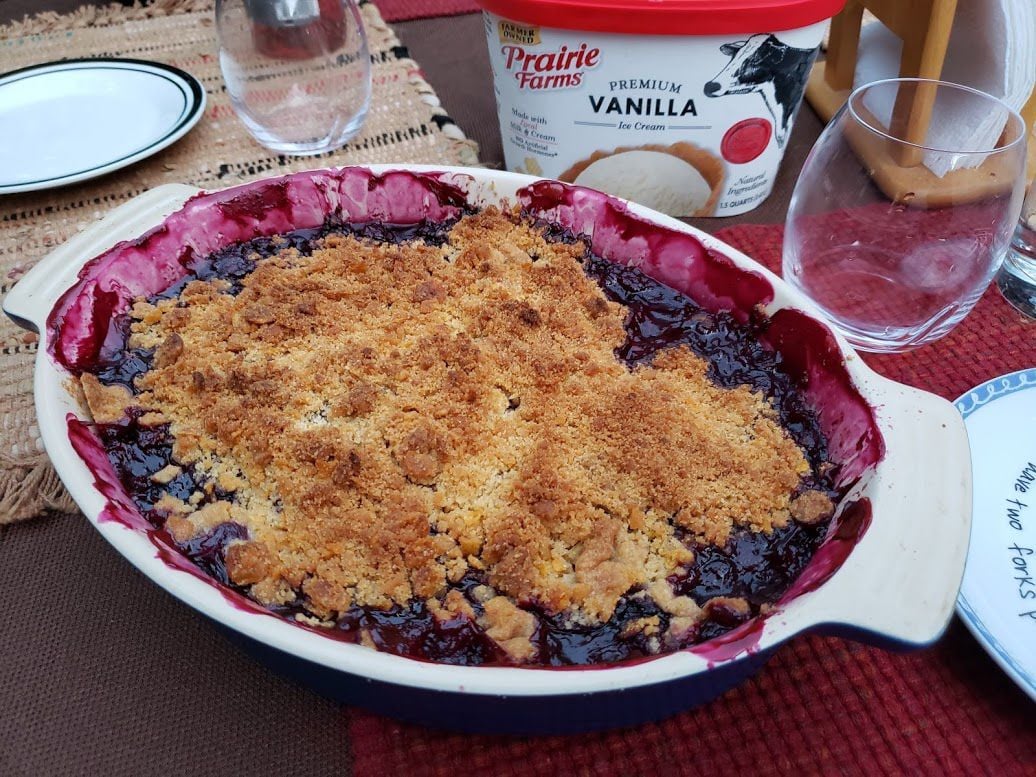
Blueberry crumble

We paired the blueberry cornflake crumble from "Cook This Book" by Molly Baz with vanilla ice cream. 

Sign up for the Madison Life email newsletter

Anyone who’s tried to braid challah, perfect a tricky knife cut or poach an egg based solely on a written recipe knows this to be true: There’s a point when words aren’t enough.

Molly Baz, Bon Appetit senior editor and former star of the magazine’s (problematic) YouTube channel, gets it. In “Cook This Book” (Clarkson Potter, 2021) every other recipe drops a QR code into the text. These link to quick videos, sized for a smartphone screen, in which Baz deveins shrimp or demonstrates a roll cut on cucumbers.

“Some techniques are best expressed visually,” she writes. “Watch the on-the-go teaching moment and jump right back into the recipe you’re cooking.”

Baz’s energetic, approachable voice is all over this cookbook. I love her take on lemons (“a desert-island ingredient for me”), the flavor flow-charts and checklists, and Baz’s golden rules. “Your palate is the only palate that matters” is something I’ve said to friends, too!

As my community-supported agriculture (CSA) boxes start rolling in, I’ve been digging into this cookbook, and I love it so much I’m thisclose to doing a full “Julie and Julia” thing. Pick it up from a local bookstore or bookshop.org ($29.90). Very few of these recipes are online, but hopefully you’ll find some inspiration.

Green beans with garlicky pistachio vinaigrette — I love the technique here, which is to blanch the beans and serve them cold with chopped nuts on top. I made this recipe three different ways — once sans parmesan for a dairy-averse friend, another time with walnuts instead of pistachios. It’s so adaptable. purewow.com/recipes/green-beans-garlicky-pistachio-vinaigrette

Farro and charred corn salad with salted almonds and queso fresco — This was the first of a few things I made for a friend who was recuperating from surgery. It has a lot of individual components — you have to char the corn, quick pickle the onions, cook the farro, and toast the nuts. But the combination of sweet and salty with fresh herbs (I used mint and basil) is wonderful, and it travels well for lunch at work. (Similar in theme: sweetpeasandsaffron.com/charred-corn-salad-with-feta-mint-and-quinoa)

Seedy sweet potato and ginger snacking cake — If a cake has sweet potatoes and pumpkin seeds in it, I can eat it for breakfast, right? Heck yes. When I bake this ginger-scented, crunchy-topped cake again, I will sub alternative grains, like buckwheat or spelt, for a portion of the AP flour.

Skirt steak with red chimichurri — I picked up a bavette steak at Meat People, a new butcher shop in my neighborhood, for this weeknight dinner. I love a quick chimichurri or salsa verde on grilled meats and fish. (A variation from Hank Shaw: honest-food.net/red-chimichurri-recipe)

Slow-roasted cod tostadas with juicy cucumber salad — Cod loin works well in this summery recipe, which Baz accompanies with a fresh citrus salad and tortilla chips. This is a classic example of when a video is helpful: learning how to supreme a grapefruit. (Another Baz recipe for family-style fish tacos: bonappetit.com/recipe/family-style-fish-tacos).

Orecchiette with bacon, snap peas and ricotta I. Love. Everything. “Little ears” are my favorite pasta shape. Thick-cut bacon gives it carbonara flair, and the combination of fresh ricotta and grated parmesan with sweet, crunchy snap peas — it doesn’t get better. And it’s so fast! (Add bacon to this and you’re close-ish: bonappetit.com/recipe/orecchiette-with-caramelized-onions-sugar-snap-peas-and-ricotta-cheese)

Pastrami roast chicken with schmaltzy onions and dill — I have cleaned my cast iron skillet so many times in the past couple of weeks. It’s Baz’s go-to pan, I think? I let this sugar-and-spice-rubbed roast chicken get a little too dark because I am lazy and do not listen well, but it was still fabulous. Roasted chicken fat garlic! freshprincesscooks.com/2021/04/26/pastrami-roast-chicken

Supremely creamy tomato and cheddar soup — I picked up the ingredients for this soup and almost didn’t make it, thanks to that mid-June heatwave that lumbered through Madison a few weeks ago. Who wants soup when it’s hot? Apparently when it’s this lusciously creamy, I do. (A riff by Claire Saffitz: bonappetit.com/recipe/creamy-tomato-soup-cheese-toasties.)

Peanutty pork noodles with crunchy celery — I finished this pasta at 10 p.m. well after my partner had given up on dinner, so I ended up eating the entire thing slowly over the course of several days. I’m happy to report it’s delicious straight from the fridge, the sweet-spicy-porky flavors intact. kitchenconfidencewithlili.com/blog/2021/5/18/peanutty-pork-noodles-with-crunchy-celery

Spiced, grilled and swaddled chicken thighs with the works — Shawarma vibes! This food cart-inspired chicken situation is the perfect thing to make on a night when you didn’t expect to have time to grill but suddenly do, and the sun isn’t going to set for another couple of hours, and you just cracked a bottle of cold rosé. That rub of smoked paprika, cumin, cinnamon and cayenne is just so good. matchingfoodandwine.com/news/recipes/spiced-grilled-and-swaddled-chicken-thighs-with-the-works

The right way to make popcorn — I have a lot of feelings about popcorn technique. Baz agrees with me about the skillet, in which she adds all the melted butter and canola oil right at the top, plus some turmeric (for color) and salt. Nutritional yeast is the finishing touch. I’ll be honest, I wrecked my first batch, salting it to high heaven. Still, I think she’s onto something. (Post-pop technique: facebook.com/watch/?v=2055792558070406)

Beef and celery stir-fry with wilted basil — Stir-fries with thinly sliced protein and crunchy veg come together in a flash and are an easy way to incorporate extra CSA or market veggies. I added baby bok choy to this one. youtube.com/watch?v=EfzCLsG3F-4

Blueberry cornflake crisp — I’m already planning variations on this easy crisp with stone fruit, like peaches and plums, and whatever local strawberries I can get my hands on. Corn flakes have a lighter texture than the oats I usually use, and a teaspoon of ground cardamom adds a little something extra. We served it with vanilla ice cream, of course. (This strawberry rhubarb crisp is similar: flavor-feed.com/strawberry-rhubarb-cornflake-crisps).

Share your opinion on this topic by sending a letter to the editor to tctvoice@madison.com. Include your full name, hometown and phone number. Your name and town will be published. The phone number is for verification purposes only. Please keep your letter to 250 words or less.

More from the Capital Times

The Link Lonk


June 25, 2021 at 11:45PM
https://ift.tt/3xW44Wk

CT Kitchen: 'Cook This Book' with snacking cakes, pork noodles and perfect popcorn - Madison.com

https://ift.tt/2RsHZwT
Pork

Mexico Rejected Tainted Pork at US Border Before Barring Smithfield Plant - Claims Journal

meat.indah.link

MEXICO CITY — Mexican inspectors have rejected three pork skin cargos at the U.S.-Mexico border since April from the biggest U.S. pork plant operated by industry giant Smithfield Foods as well as another shipper, the country’s health safety agency told Reuters.

In Mexico, pork skins are mostly used to make chicharrones, a popular fried delicacy found in a variety of dishes, from tacos to soups. The skins are not as prized by American consumers, underscoring the complementary nature of the binational pork trade.

Mexico was the biggest export market for U.S. pork by volume before being surpassed by China in 2020.

After notifying U.S. authorities of the tainted skins, Mexico’s health safety agency, Senasica, requested on June 16 that Smithfield’s Tar Heel, North Carolina, facility’s export license be revoked. The U.S. Department of Agriculture announced the suspension on Monday.

Last year, the plant exported 41,000 tonnes of skins, bacon and other pork products to Mexico, and this year through May another 24,000 tonnes, according to government data.

Smithfield, owned by Hong Kong-listed WH Group, said the issue is not related to Smithfield or the facility, but is due to a third party company. It said in a statement that authorities are working to resolve the matter.

Senasica said the third-party shipper was Rava Forwarding Inc, which also became ineligible to export from a cold storage facility in Laredo, Texas, on June 18.

Any resumption in shipments from either facility will likely take at least a few months, according to Senasica’s press office.

Smithfield’s Tar Heel plant – the world’s largest – can slaughter more than 34,000 hogs daily, about 7% of U.S. capacity, according to industry estimates.

Senasica’s decision to prevent further exports from the Smithfield and Rava facilities was based on the “accumulation” of tainted cargos of refrigerated pork skins.

Specifically, an April 15 rejection from the Tar Heel plant came after inspectors observed rotting product covered with “yellowish spots.” Two subsequent rejections in June, which may have included a mix of product from both facilities, revealed more of the spots as well as fungus outbreaks.

Rava could not immediately be reached for comment.

Was this article valuable?

Here are more articles you may enjoy.

The Link Lonk


June 25, 2021 at 12:00PM
https://ift.tt/3dePlhq

Mexico Rejected Tainted Pork at US Border Before Barring Smithfield Plant - Claims Journal

https://ift.tt/2RsHZwT
Pork
Prop 12 may create pork shortage in California - Feedstuffs

meat.indah.link

California economist and former Secretary of California Technology, Trade and Commerce Agency Lon Hatamiya has released a white paper detailing the impacts Proposition 12 may have on California consumers – exploring pork price changes against an anticipated 50% reduction of pork supply, as estimated by independent market expert Rabobank.

“Market access restrictions from Proposition 12 will further limit available supply into California, thereby driving up pork prices for all consumers,” said Hatamiya. “The negative financial burden falls largely on the diverse ethnic consumers and communities that make up California, with pork being an important source of protein for African American, Asian American, and Hispanic households, businesses, and restaurants.”

With an unworkable implementation timeline of Proposition 12, Hatamiya analyzed data from a pork pricing study conducted by Kansas State researcher Glynn Tonsor and Purdue researcher Jayson Lusk. The Tonsor-Lusk research sought to determine how sensitive consumer pork purchasing behavior is to price changes for six pork products (loin, ribs, shoulder, breakfast sausage, dinner sausage, and bacon).

Key conclusions from the Hatamiya white paper include:

  • Consumers will have less to spend on other items if they are required to spend more on pork, also known as “consumer welfare.” If a state passes a law that excludes a large volume of pork production entering the market (Prop 12 as an example), this will reduce availability to consumers – driving up price due to the lower availability of supply. For example, a 50% reduction in available bacon would result in 60% higher bacon prices in the Los Angeles market; a 50% reduction in available pork loin would result in 42% higher pork loin prices.
  • When facing higher retail prices, consumers will buy a lower volume of impacted products at a higher price – clearly resulting in economic harm and impacting consumer welfare (meaning that consumers will have less to spend on other items, such as food, rent, utilities, etc.) Specifically, a 50% retail pork price increase would result in consumer loss of $224.5 million annually in Los Angeles; similarly, a $47.5 million consumer loss in Sacramento; $46.5 million consumer loss in San Diego; and $84.5 million consumer loss in San Francisco/Oakland.

“The hasty implementation of Proposition 12 greatly impacts the entire food supply chain – from farmers and food processors to retailers, grocers, restaurants and consumers,” said California Retailers Association President Rachel Michelin. “It will create food insecurity and increase food prices on small businesses and families who cannot afford it.”

California Hispanic Chambers of Commerce President & CEO Julian Canete, commented, “Imagine going to the grocery store and finding the price of bacon, pork chops or ham has skyrocketed. Or you’re ordering carry out from a Latino or Asian restaurant and your favorite pork dish has been removed from the menu. These scenarios are a possibility in California with the pending implementation of Proposition 12.”

Hatamiya was commissioned by the Food Equity Alliance – a statewide coalition of California retailers and grocery stores, restaurants, business organizations, food processors, and food equity supporters calling on Governor Newsom and state leaders to fend off the potential pork shortage by delaying the implementation of Proposition 12. The Hatamiya white paper can be found here.

The Link Lonk


June 25, 2021 at 03:27AM
https://ift.tt/3x93lBr

Prop 12 may create pork shortage in California - Feedstuffs

https://ift.tt/2RsHZwT
Pork

Thursday, June 24, 2021

Mexico rejected tainted pork at U.S. border before barring Smithfield plant - Reuters

meat.indah.link

MEXICO CITY, June 24 (Reuters) - Mexican inspectors have rejected three pork skin cargos at the U.S.-Mexico border since April from the biggest U.S. pork plant operated by industry giant Smithfield Foods as well as another shipper, the country's health safety agency told Reuters.

In Mexico, pork skins are mostly used to make chicharrones, a popular fried delicacy found in a variety of dishes, from tacos to soups. The skins are not as prized by American consumers, underscoring the complementary nature of the binational pork trade.

Mexico was the biggest export market for U.S. pork by volume before being surpassed by China in 2020.

After notifying U.S. authorities of the tainted skins, Mexico's health safety agency, Senasica, requested on June 16 that Smithfield's Tar Heel, North Carolina, facility's export license be revoked. The U.S. Department of Agriculture announced the suspension on Monday.

Last year, the plant exported 41,000 tonnes of skins, bacon and other pork products to Mexico, and this year through May another 24,000 tonnes, according to government data.

Smithfield, owned by Hong Kong-listed WH Group (0288.HK), said the issue is not related to Smithfield or the facility, but is due to a third party company. It said in a statement that authorities are working to resolve the matter.

Senasica said the third-party shipper was Rava Forwarding Inc, which also became ineligible to export from a cold storage facility in Laredo, Texas, on June 18.

Any resumption in shipments from either facility will likely take at least a few months, according to Senasica's press office.

Smithfield's Tar Heel plant - the world's largest - can slaughter more than 34,000 hogs daily, about 7% of U.S. capacity, according to industry estimates.

Senasica's decision to prevent further exports from the Smithfield and Rava facilities was based on the "accumulation" of tainted cargos of refrigerated pork skins.

Specifically, an April 15 rejection from the Tar Heel plant came after inspectors observed rotting product covered with "yellowish spots." Two subsequent rejections in June, which may have included a mix of product from both facilities, revealed more of the spots as well as fungus outbreaks.

Rava could not immediately be reached for comment.

Reporting by David Alire Garcia; Additional reporting by Tom Polansek in Chicago and Adriana Barrera in Mexico City

Our Standards: The Thomson Reuters Trust Principles.

The Link Lonk


June 25, 2021 at 05:31AM
https://ift.tt/3qqX5C9

Mexico rejected tainted pork at U.S. border before barring Smithfield plant - Reuters

https://ift.tt/2RsHZwT
Pork

Featured Post

Monterey Beef Rice Skillet | Food & Recipes from the Farm | lancasterfarming.com - Lancaster Farming

meat.indah.link Ingredients 1 pound hamburger 1 cup uncooked rice 2-1/2 cups water 1 onion, chopped 1 teaspoon salt 1 pint tomato ...

Popular Posts