The world is slowly returning to normal and figuring out ways to co-exist with COVID-19. However, “normal” is a relative term.
That’s especially true when it comes to defining economic activity around the HRI (hotel, restaurant and institutional) sector – social distancing and slowdown in travel has greatly impacted the food service industry. That has broad implications for the beef industry; much of the industry’s high-end product gets funneled into food service.
Meanwhile, though, wholesale beef prices have staged a huge recovery during the past several months. Consider that in mid-June, year-over-year (YOY) wholesale beef prices were essentially identical at $220 per cwt. From there, though, 2020 witnessed a decline down to ~$201 over the next four weeks – leaving this year’s mark about $12 behind last year. The relative under-performance in ’20 wasn’t surprising given the given the sharp slowdown from food service.
However, over the following six weeks, the Choice cutout closed the gap by $8 and finished August at nearly $230, just $4 behind on a YOY basis. Not only did the cutout close the gap since mid-July, but that happened on bigger beef volume – with 2020 weekly production up roughly 3% versus 2019. Best of all, that’s happened without much buying support from the HRI sector.
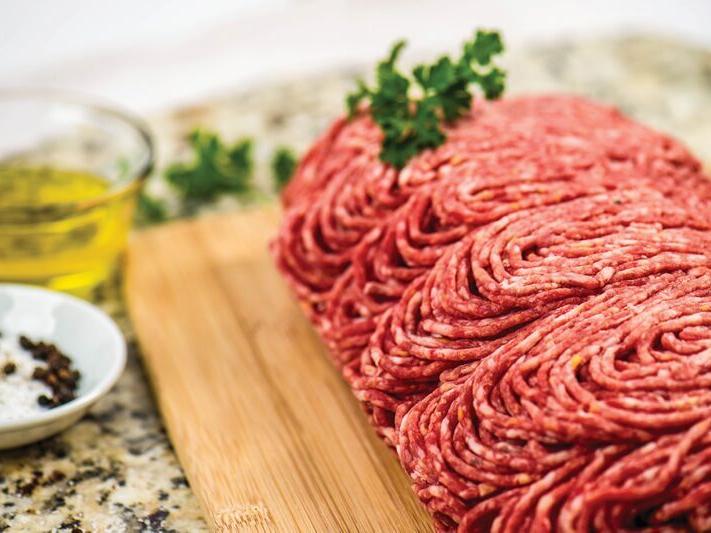
Seemingly, the beef industry is benefitting from very strong retail pull. Consumers are actively purchasing beef at the retail level – including high-end product – and establishing solid support for wholesale beef prices. That observation is best reinforced by renewed divergence between rib/loin versus round/chuck values.
This occurrence inherently invokes questions of whether or not this will be a permanent shift. That is, will consumers increasingly expect to purchase beef at retail at the high-end of the market?
Regardless of how this plays out going forward, it reinforces the importance of beef quality and consistency. The advances the industry has made during the past 10 to 15 years is all-important to consumer behavior – else we wouldn’t be witnessing this sort of market action. And it’s paid dividends at the most challenging time, enabling retail to backfill much of the load that’s often carried by the HRI sector.
Nevil Speer is based in Bowling Green, Ky. and serves as director of industry relations for Where Food Comes From (WFCF). The views and opinions expressed herein do not necessarily reflect those of WFCF or its shareholders. He can be reached atnspeer@wherefoodcomesfrom.com.The opinions of the author are not necessarily those of beefmagazine.com or Farm Progress.
Unlike regular beef, Beyond Meat’s Beyond Beef product—a plant-based ground meat substitute whose sales have surged in the past few years as beef has come under fire for its environmental impact—doesn’t benefit from simmering for hours. But a Texas chili made from Beyond Beef does benefit from simmering: it takes time for the spices to come together, the tomatoes to become deep and mellow, and the texture to develop.
For this Beyond Beef chili, first you give the chili sauce a long simmer—and then add the “meat” at the end. And while it might not technically qualify for competition in Terlingua, it’s otherwise a standard bowl of red. No beans in sight.
Meatless, Beanless Bowl of Red
2 tablespoons cooking oil 2 guajillo chiles, stems and seeds removed 2 ancho chiles, stems and seeds removed 1 onion, trimmed and cut into 8 pieces 4 cloves garlic, peeled and smashed 1 28-ounce can crushed tomatoes 1 quart (4 cups) vegetable stock or water 1 tablespoon paprika 2 teaspoons cumin 1 teaspoon cayenne 1 teaspoon dried oregano 2 teaspoons ground black pepper ¼ cup masa harina 1 pound Beyond Beef (not Beyond Beef crumbles) Salt to taste
Heat oil over medium heat in a stew pot. Briefly fry the chiles to infuse the oil, about 30 seconds on each side. Turn off the heat, leaving the seasoned oil in the pot.
Put the chiles in a heat-safe bowl and cover with two cups of boiling water. Set aside until cool.
Once cool, add the chiles and their liquid to a food processor or blender, along with the onion and garlic. Puree until smooth.
Heat the pot over medium heat again. Add the chile puree and cook, stirring constantly, for about two minutes. Be careful, it might splatter a bit. Add the tomatoes, stock, seasonings, and a big pinch of salt. Simmer for 2 hours.
Just before serving, heat a sauté pan over medium heat. Add the Beyond Beef and a good pinch of salt. Sauté until cooked through, using a spatula to break up the meat into small chunks, about 6-7 minutes (it will change color slightly). Remove from heat and drain on paper towels.
In a small bowl, whisk together the masa harina and about a half cup of the chili. Add the masa mixture and the Beyond Beef to the chili and simmer for 5 minutes. Salt to taste and serve.
Millions of tons of emissions are embedded in Europe’s Brazilian beef imports each year, equivalent to the annual footprint of between 300,000 and 2.4 million EU citizens, according to a new report by London-based NGO Earthsight.
Though global emissions are expected to see a record fall this year due to the coronavirus pandemic, Brazil is set to defy the trend, with a predicted rise of between 10% and 20%. Deforestation and cattle ranching account for over half of the country’s emissions.
Two companies, JBS and Silca, were found to be responsible for almost a quarter of the estimated emissions documented by Earthsight, while just eight farms were responsible for over half of all imported emissions.
Millions of tons of emissions are embedded in Europe’s Brazilian beef imports each year, equivalent to the annual footprint of between 300,000 and 2.4 million EU citizens, according to a new report by London-based NGO Earthsight.
The researchers found as much as 21 million tons of Greenhouse Gas emissions may have been attached to Europe’s beef imports in 2019, with the highest emissions linked to Italy, followed by the Netherlands, Spain, Germany and the United Kingdom.
Though global emissions are expected to see a record fall this year due to the coronavirus pandemic, Brazil is set to defy the trend, with a predicted rise of between 10% and 20%. Deforestation and cattle ranching account for over half of the country’s emissions.
Most of the imported emissions are linked to cattle ranching in Mato Grosso, a Brazilian state that straddles the Amazon and Cerrado biomes.
Two companies, JBS and Silca, were found to be responsible for almost a quarter of the estimated emissions documented by Earthsight, while just eight firms were responsible for over half of all imported emissions.
Italian firms Silica and Bervini Primo, Brazilian firm JBS’s European operations, and German food giant Tonnies Fleisch had higher embedded carbon footprints than entire recipient countries, according to the report.
The research looked at average emission estimates across various types of pasture and forms of herd management in Brazil’s top five beef exporting states, with deforestation being the most significant factor in determining the carbon footprint.
Deforestation in the Brazilian Amazon soared in 2019, up by almost a third on the previous year, and has increased every year since 2017.
Europe’s reliance on beef from Mato Grosso, Brazil’s second most deforested state and the source of about 85% of the continent’s emissions, were reflected in the high-end estimates Earthsight reported, the group said.
Sam Lawson, Earthsight’s director, said the extent of deforestation and carbon emissions risk in Europe’s Brazilian beef supply chains was “frightening”.
“Authorities in both the EU and UK have committed to taking firm action to address the impact of their consumption,” he said.
“These findings underscore the urgent need for European leaders to pass supply chain due diligence legislation. Importers must be forced to know the origin of their products and exclude those associated with forest loss and other abuses.”
Banner image: The cattle which the Amazon and Cerrado supports help feed the developed world’s hunger for beef. Photo by A.C. Moraes.
Feedback: Usethis formto send a message to the editor of this post. If you want to post a public comment, you can do that at the bottom of the page.
South Korea’s Vons Chicken, which landed in the Bay Area in 2014 and now has 20 locations across the U.S., is opening its first San Diego franchise this Saturday in National City. Though some Vons stores also serve oven roasted chicken, this outpost is focusing on Korean fried chicken, featuring six different styles and sauces that can be applied to chicken wings, drumsticks, and boneless chicken pieces.
The takeout menu includes yangnyeom chicken coated with a sweet and spicy gochujang sauce, garlic fried chicken, crispy chicken with honey butter or cheddar cheese, padak chicken with green onions, garlic-soy chicken, and crunch fried chicken coated in five-grain powder. Sides range from kimchi fried rice to sweet potato fries and their version of the classic Korean rice cake dish, tteokbokki.
To compete with established neighborhood chicken wing spots like Royal Mandarin and Golden Chopsticks, Vons Chicken is also offering party platters of 50 or 100 wings.
Hours are Sunday through Thursday from 10 a.m. to 9 p.m. and Friday and Saturday from 10 a.m. to 10 p.m.
The Nomarama event augments the brewery’s new second-Sunday jazz brunches at both the Virginia Beach and Norfolk locations, which also offer rotating pop-ups of local coffee roasters. In Norfolk, Sept. 13 will be chef David “Regular” Hannah serving an array of “brunch-themed snacks,” Vessel Craft Coffee, and the jazz-fueled funk of Paper Aliens. Virginia Beach will feature the Andy Gilstrap Project, brunch from Donnie Fry’s, and coffee from nano-roastery Fathom Coffee.
Mélange chef/owner Elias Taddesse shows off his Ethiopian-influenced fried chicken sandwich. Photograph courtesy Edens.
Chef Elias Taddesse spent most of his career in the rarified world of fine-dining. Over the last few years, though, he’s gone the opposite route—a burger pop-up. His new restaurant, Mélange, melds high and low brow. The Mount Vernon Triangle spot opens Friday, September 4 with burgers and fried chicken sandwiches to-go. Down the line, Taddesse plans to offer a tasting menu that combines his French culinary training with his Ethiopian heritage.
Taddesse was raised in in Addis Ababa, Ethiopia and Minneapolis. He studied at the Institut Paul Bocuse in France, and worked for Michelin-starred restaurants in New York, including as executive chef of Caviar Russe. Eventually, though, he wanted to run his own business and “needed to find my own identity as a chef.” So he returned to Ethiopia, where he consulted for hotels and resorts as he tried to figure out what his own restaurant might look like. A burger competition with a friend provided the answer.
“I ended up really just destroying him, and then I figured I found the formula for a concept,” Taddesse says.
Taddesse ultimately ended up returning to DC, where in 2016, he started a burger pop-up called Salt N’ Pepper with Harvey’s Market butcher shop in Union Market. The pop-up then moved to Wet Dog Tavern near the U Street corridor. Now, Taddesse has partnered with developer Edens to be the first in a new program called Catalyst, which helps first-time restaurateurs test their concepts in otherwise vacant spaces.
Mélange will be open for takeout and delivery to start. (Order online here.) One of the main attractions is, of course, the burger. Taddesse doesn’t just slap together any old patty. His blend of dry-aged Roseda beef has been carefully calculated based on how the fat of different cuts render, and the textures of various muscle fibers. Mélange’s “classic” burger comes with the standard tomato, iceberg lettuce, and American cheese but gets upgraded with brown butter aioli and pickled red onion. Another signature: “the Italian” with smoked mozzarella, tomato confit, and spicy basil aioli.
A vegan burger combines together all the components of an Ethiopian vegetable platter: a lentil-beet patty, confit swiss chard, timatim salata (a salad of diced tomatoes, onions, and peppers), and spicy lentil spread on a rosemary ciabatta roll, which is meant to recall the rosemary often used in beef tibs.
Mélange’s fried chicken sandwich is a play off Ethiopia’s national dish, doro wat. Photograph courtesy Edens.
The menu also includes a couple fried chicken sandwiches, most notably “The National,” a take on Ethiopia’s national dish, doro wat. Taddesse uses Ethiopian spices for the dry rub and marinade, then coats the fried chicken in a spicy chicken stew glaze. It’s served with a turmeric slaw, a kibbeh (spiced butter) aioli, and a choice of a hard boiled or runny egg.
At some point—when depends on what happens with Covid—Taddesse also plans to offer an East-African inspired cocktail menu at the bar as well as a tasting menu serving “contemporary French with Ethiopian flavors.” (Think berbere-cured himachi with avocado and banana leaf puree.)
“I’m not trying to reinvent the wheel or anything,” he says. “I’m just using the techniques that I’ve learned and then incorporating our flavors into it.”


 The Link Lonk