Rechercher dans ce blog

Thursday, October 1, 2020

UK beef exports to US restart after two decades - Food Safety News

meat.indah.link

The first shipment of beef from the United Kingdom to the United States in more than 20 years was dispatched this week.

The U.S. market had been closed to EU beef since January 1998, when the country introduced import restrictions on beef, sheep and goats and their products because of Bovine Spongiform Encephalopathy (BSE) concerns. BSE is also called mad cow disease.

Four businesses in Northern Ireland and Wales have been listed by the U.S. Department of Agriculture’s Food Safety Inspection Service (FSIS), as eligible to export beef to America.

The first shipment of beef from Foyle Food Group of Foyle Campsie in Northern Ireland has been dispatched, with further lots from across the UK expected in the coming weeks. Kepak Group in Merthyr, Wales, as well as WD Meats and Granville Food Care in Northern Ireland, can also start production and export of UK beef for U.S. consumers.

Environment Secretary George Eustice said: “Our beef is renowned as some of the best in the world for its high quality, food safety and welfare standards, and this landmark milestone means more people around the globe can enjoy our product.”

A long process
The U.S. started to progressively reopen its market to exports of beef from the European Union, starting with the Republic of Ireland, in 2015.

In March 2020, the U.S. agreed equivalence of standards on the UK’s disease control measures following a three-week inspection this past summer.

The USDA’s FSIS audit report found that UK meat hygiene systems and controls are of a suitable, equivalent standard for products to be imported to the U.S.

The report noted all the UK meets the U.S.’s production requirements, so beef from England, Wales, Scotland and Northern Ireland is eligible for export. The FSIS inspected five beef sites, four pork and lamb, and several laboratories across the UK between July and August 2019.

Phil Hadley, AHDB International Market Development Director, said the U.S. represents an important potential market for red meat exports.

“This important milestone will bring a fantastic boost to the sector and we look forward to seeing more of our red meat served up on dinner tables across the U.S. in the months and years to come,” he said.

Karen Pierce, British Ambassador to the U.S., said: “American consumers already have an appetite for a range of quality British products, including fine cheeses, whisky, salmon and biscuits, and beef is sure to become popular in the States.”

The government is also in the process of negotiating a UK-US free trade agreement following the UK’s exit from the European Union.

International Trade Secretary Liz Truss said the beef agreement could be the tip of the iceberg with further opportunities for British agriculture because of the potential trade deal.

(To sign up for a free subscription to Food Safety News, click here.)

The Link Lonk


October 01, 2020 at 11:17AM
https://ift.tt/3cJRLTC

UK beef exports to US restart after two decades - Food Safety News

https://ift.tt/2RxTDX4
Beef

China temporarily suspends beef imports from Minerva plant in Brazil - www.thecattlesite.com

meat.indah.link

News

China temporarily suspends beef imports from Minerva plant in Brazil

01 October 2020

China has temporarily suspended imports from a beef planted owned by Minerva SA for one week.

Reuters reports that the suspension comes amid concerns over coronavirus contamination in Brazilian meat plants.

The Chinese customs authority said in a statement on its website dated Wednesday 30 September that the suspension would take effect on Thursday 1 October and last for one week, after which imports could resume.

The statement did not give a reason for the suspension and identified the facility by its registration number as a plant in the Barretos municipality of Sao Paulo state.

According to a Chinese customs statement issued on Thursday 1 October, the authority said the suspension came after a package of frozen boneless beef from Minerva SA had tested positive for the coronavirus.

Minerva declined to comment. The company is South America's largest exporter of beef, with China being the largest importer of Brazilian meat.

As the coronavirus ravaged Brazilian meat facilities with thousands of cases, China has halted meat imports from Brazilian food processors including Marfrig, JBS SA and BRF SA over contamination concerns in the past few months.

Not including the weeklong Minerva temporary suspension, a total of seven Brazilian meat plants remain suspended from exporting to China, with some of them having stopped shipments voluntarily, according to Chinese customs office records.

Marfrig's chief executive said on Tuesday 29 September that he expects China to issue new export licenses to Brazilian and Argentine meat plants later this year, but did not give further details.

Read more about this story here.

Source: Reuters

The Link Lonk


October 01, 2020 at 04:57PM
https://ift.tt/3n7AGYD

China temporarily suspends beef imports from Minerva plant in Brazil - www.thecattlesite.com

https://ift.tt/2RxTDX4
Beef

Answer Man: Biltmore Estate bans purses? Sells beef for $99 a pound? - Citizen Times

meat.indah.link
CLOSE

Today’s batch of burning questions, my smart-aleck answers and the real deal:

Question: A friend recently went to the Biltmore Estate and walked from the parking lots to the house and got ready to go in. But a security guard told her no purses were allowed inside. There is a sign at the house that states this, but there aren’t any in the parking lots. Why doesn’t the estate put some signage up in parking lots so people don’t walk all the way to the house and then have to walk back or take a shuttle to drop off their purse? Also, why aren’t purses allowed inside? And when did this start?

More: Answer Man: Biltmore Estate's farm animals — for show or for the table?

My answer: I once saw a woman walk out of that house with a couch, six library books and a set of candlesticks in her purse. Seriously, the purse sizes in this country are out of hand.

Real answer: "Since we updated our policies about bags inside Biltmore House, we have placed signage in our parking areas to ensure that guests make arrangements for their purses and bags before they arrive at Biltmore House," said LeeAnn Donnelly, estate spokeswoman. "We continue to evaluate on-site guest communications, and add signage as necessary."

Donnelly had a possible explanation for this guest's experience.

"Some lots have or are just about to receive new signage, so it’s possible this guest may have parked in a lot that lacked signage on the day of their visit," Donnelly said. "We apologize for the inconvenience to this guest. That said, all of our important policies, including our bag policy, are referenced on our website, during the ticket purchase process, and in pre-visit emails that guests receive."

I addressed Biltmore's increased security in August 2019," including screenings at the entrances to buildings. Back then, Donnelly noted: "As a destination with more than 1.5 million guests each year, we are following the lead of other attractions, museums and arenas of our size who have similar measures in place. It is becoming a very common part of an attraction entry experience."

Regarding bags, Donnelly said the estate has followed many other attractions across the country and adopted certain policies regarding bags inside structures.

More: Answer Man: Biltmore Estate mystery building? Nancy Williams MIA?

"The safety of our guests and team members is our top priority," Donnelly said. "For entry into Biltmore House, all bags, packages, and boxes will be inspected by security personnel."

The estate's most recent update was elimination of handling guests' items, part of COVID-19 safety measures.

"A clear bag allows a visual inspection," Donnelly explained.

Here's the rule: Guests may bring personal items in clear bags no larger than 12”x 6”x 12", in sealable plastic storage bags no larger than one gallon, or in bags/clutches no larger than 4.5”x 6.5.”

"If your bag does not meet these requirements, we ask that you leave it in your vehicle or ask about storage options," Donnelly said. "Biltmore has a limited supply of lockers for this purpose."

The estate has a limited supply of complimentary plastic bags available, but it recommends bringing your own bag, leaving personal items in your vehicle, or asking about storage options. Donnelly noted that exceptions are made for medical items after inspection. 

Also, the estate reserves the right to refuse admission for any bag, parcel, or other item. Weapons are prohibited.

Question: I understand the Biltmore Estate is selling ground beef, and I heard it was $99 a pound. That cannot be right. Can you check on this?

My answer: Before this new purse policy went into effect, my wife stuffed $2,300 worth of ground chuck into her handbag during our last visit to the estate.

Real answer: No, that dollar figure is not correct.

"It is correct that Biltmore is selling beef products through its new 'Biltmore Grown' line at Biltmore Shop, the estate’s online retail company," Donnelly said. "Biltmore Grown features beef packages with multiple meat cuts. However, the pricing your reader mentions is not correct."

More: Answer Man: Biltmore Estate had a 'manure war?' And more on its 'Market Garden'

Pricing of the beef package is $99.99 for 10 packages of beef that are 1 pound per package, or 10 pounds total. For more information, visit https://ift.tt/33joAUE

Donnelly said Biltmore’s director of agriculture, Kyle Mayberry, oversees the beef program.

"It features pasture-based angus beef, meaning the herd lives on pasture at all times and eats a ration of grain for the best quality in marbling and taste," Donnelly said, adding the beef is free of added hormones.

This is the opinion of John Boyle. To submit a question, contact him at 232-5847 or jboyle@citizen-times.com.

Read or Share this story: https://ift.tt/36npBww

The Link Lonk


October 01, 2020 at 04:02PM
https://ift.tt/36npBww

Answer Man: Biltmore Estate bans purses? Sells beef for $99 a pound? - Citizen Times

https://ift.tt/2RxTDX4
Beef

Ozaki Beef Is the Premium Upgrade on Wagyu - Bloomberg

meat.indah.link
[unable to retrieve full-text content]Ozaki Beef Is the Premium Upgrade on Wagyu  Bloomberg The Link Lonk


October 01, 2020 at 11:30AM
https://ift.tt/3n8axco

Ozaki Beef Is the Premium Upgrade on Wagyu - Bloomberg

https://ift.tt/2RxTDX4
Beef

Where’s The Pork? U.S. Taxpayers Funded A Lot Of Wasteful Spending (2017-2019) - Forbes

meat.indah.link

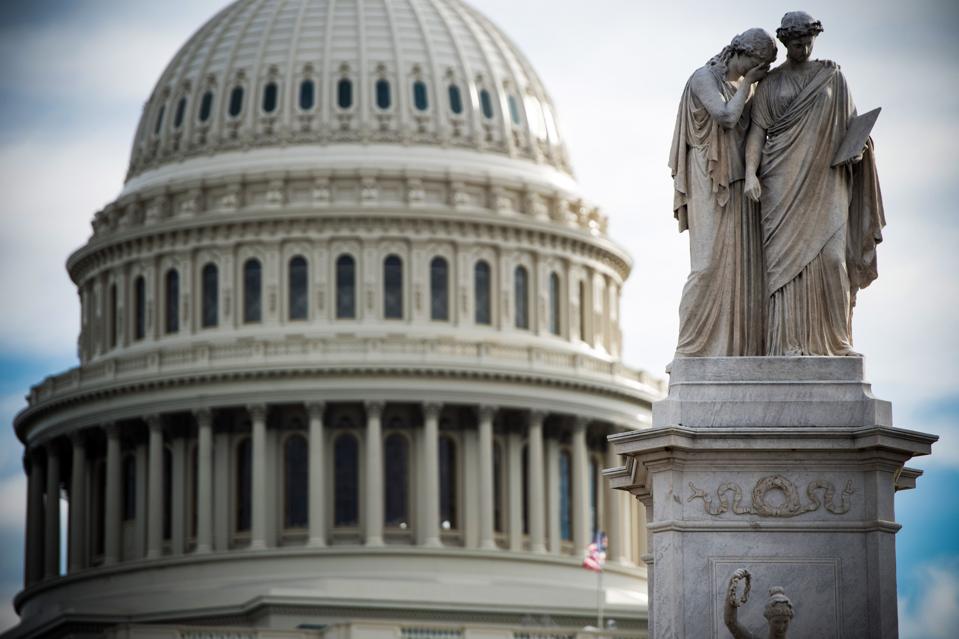
The ever-rising federal debt will soon surpass $27 trillion – at least $82,000 for every person in the U.S. Just how much federal waste, duplication, and weird or unnecessary spending are your tax dollars funding?

It’s hard to know where to begin. Not every federal grant is wasteful, but there are plenty that are highly questionable.

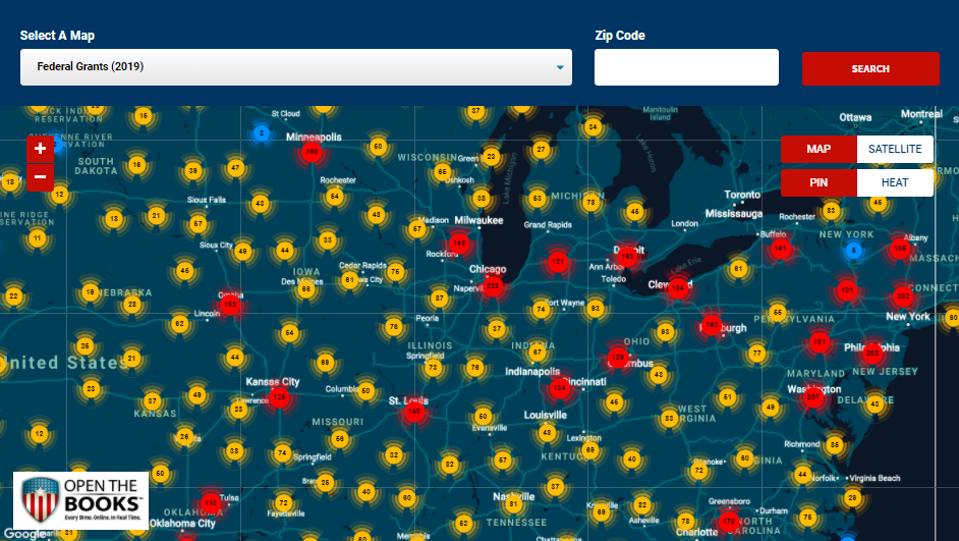
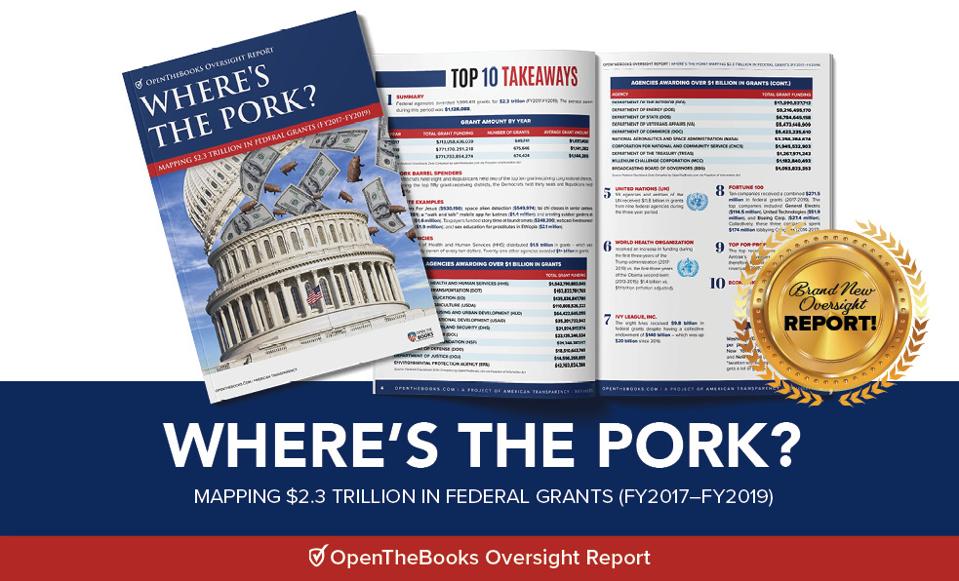
Today, we published our oversight reportWhere’s The Pork? Mapping $2.3 Trillion In Federal Grant-Making (FY2017-FY2019).” Now, you can search our interactive map and explore every federal grant by ZIP Code across the country.

How much waste or unnecessary spending is flowing from Washington, D.C. into contractors located in your own backyard?

Just click a pin (ZIP Code) on our interactive map and scroll down to see “who” received “how much” rendered in the chart beneath the map.

Recommended For You

Consider our top ten takeaways – developed after reviewing federal grant data between the fiscal years 2017 and 2019:

1.     Summary: Federal agencies awarded 1,999,811 grants for $2.3 trillion (FY2017-FY2019). The average award during this period was $1,128,088.

2.     Pork Barrel Spenders: Democrats held eight and Republicans held two of the top ten grant-receiving congressional districts. Among the top fifty grant-receiving districts, the Democrats held thirty seats and Republicans held twenty.

3.     Waste Examples: Hookers For Jesus ($530,190); tai chi classes in senior centers ($671,251); creating outdoor gardens at schools ($1.6 million); and space alien detection ($7 million). Taxpayers funded story time at laundromats ($248,200); sex education for prostitutes in Ethiopia ($2.1 million); a social media war on tanning beds ($3.3 million); webcast-livestreamed eclipses ($3.7 million); and subsidized the airport on Martha’s Vineyard ($12 million).

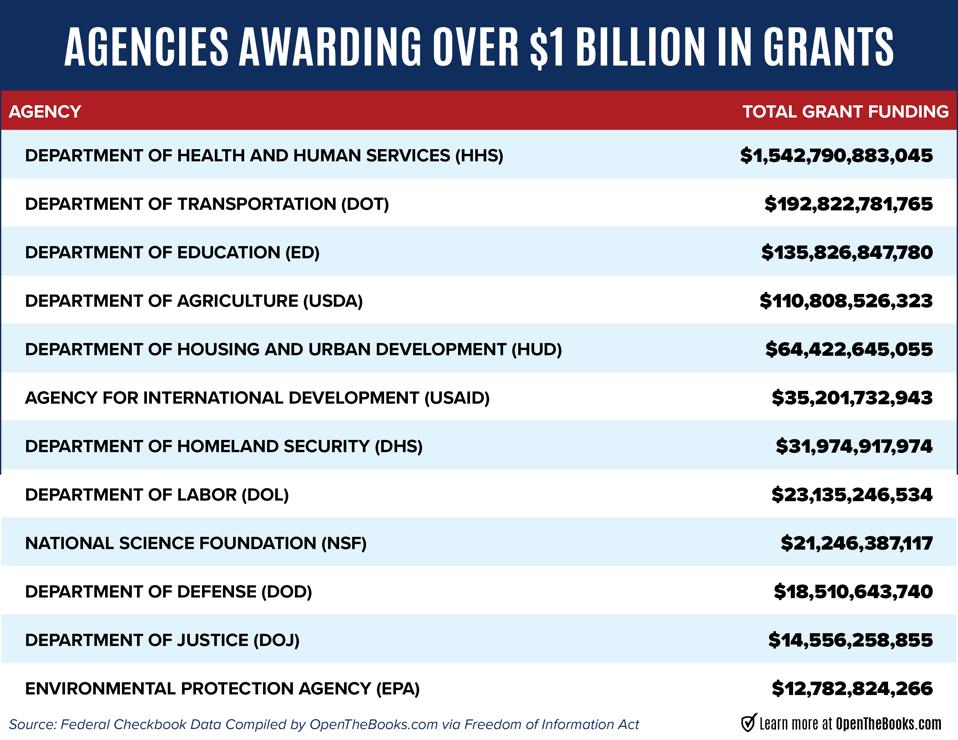
4.     Top Agencies: Department of Health and Human Services (HHS) distributed $1.5 trillion in grants – which was approximately seven of every ten dollars. Twenty-one other agencies awarded $1+ billion in grants.

5.     United Nations (UN): 59 agencies and entities of the UN received $11.8 billion in grants from nine federal agencies during the three-year period.

6.     World Health Organization received an increase in funding during the first three-years of the Trump administration (2017-2019) vs. the first-three years of the Obama second-term (2013-2015): $1.4 billion vs. $1.1 billion (inflation adjusted).  

7.     Ivy League, Inc. The eight Ivies received $9.8 billion in federal grants despite having a collective endowment of $140 billion – which was up $20 billion since 2016.

8.     Fortune 100: ten companies received a combined $271.5 million in federal grants (2017-2019). The top companies included General Electric GE ($114.5 million), United Technologies UTX ($51.9 million), and Boeing Corp. BA ($27.4 million). Collectively, these three companies spent $174 million lobbying Congress (2014-2017).

9.     Top For-Profits: The top receiver was Amtrak ($5 billion). Amtrak’s revenues were $10.2 billion; therefore, federal grants comprised half of all revenues (2017-2019).

10. Economic Subsidy (per capita): Washington D.C. received more than $58,000 per person, followed by Alaska ($17,639), New York ($10,987), Vermont ($10,240), and New Mexico ($9,944). Despite the claim “taxation without representation,” DC certainly gets a lot of grants.

The Link Lonk


October 01, 2020 at 08:03AM
https://ift.tt/33mzHfz

Where’s The Pork? U.S. Taxpayers Funded A Lot Of Wasteful Spending (2017-2019) - Forbes

https://ift.tt/2RsHZwT
Pork

CME Pork Cutout Futures and Options Contract Coming Soon - The Pig Site

meat.indah.link

"As the market has evolved, our customers continue to look for new tools to manage the price risk associated with hog and pork production," said Tim Andriesen, CME Group Managing Director of Agricultural Products. "The Pork Cutout futures and options are complementary to our Lean Hog contracts and will provide clients with the ability to manage risk and discover price from the hog all the way to the meat case."

Hogs are increasingly bought and sold in the physical market based on a formula which uses the cutout. The Pork Cutout reflects the approximate value of a hog calculated using the prices paid for wholesale cuts of pork. The values, or cuts, used to calculate the pork cutout include the loin, butt, picnic, rib, ham and belly. The new contracts reflect the price of the wholesale product after processing.

"The National Pork Producers Council welcomes the introduction of the new Pork Cutout trading vehicle," said NPPC President Howard "AV" Roth, a pork producer for Wauzeka, Wisconsin. "We applaud CME Group for providing another risk management option, in addition to the Lean Hog contract, and for enhancing market visibility, which is so important to maintaining a highly competitive and innovative pork production system in the United States."

Pork Cutout futures and options will be financially-settled to the CME Pork Cutout Index, which is a five-business day weighted average of prices reported by the US Department of Agriculture (USDA) and published in its "National Daily Pork Report Fob Plant - Negotiated Sales – Afternoon" report daily.

The new contracts will be quoted in U.S. cents per pound, will have a contract size of 40,000 pounds and will be available for trading on CME Globex or through block trades via CME ClearPort, and will be listed by and subject to the rules and regulations of CME.

The launch is pending all relevant regulatory review periods.

For more information on CME Group's Pork Cutout futures and options and the CME Pork Cutout Index, please visit: www.cmegroup.com/pork-cutout.

The Link Lonk


October 01, 2020 at 07:02AM
https://ift.tt/2GdfVtS

CME Pork Cutout Futures and Options Contract Coming Soon - The Pig Site

https://ift.tt/2RsHZwT
Pork

China's pig herd rebounds after swine fever, but pork supply will take time to recover - Successful Farming

meat.indah.link

By Dominique Patton

BEIJING, Oct 1 (Reuters) - China's huge pig herd is rebounding rapidly after being decimated by disease but pork output will take much longer to restore given the low quality of the new herd, say experts and analysts.

China's pork output fell to its lowest level in 16 years last year after African swine fever swept through farms nationwide from 2018 onwards.

With as many as 60% of its breeding sows gone by the second half of 2019, production of market pigs plunged and pork prices soared to new highs, where they have hovered for much of this year.

But after Beijing called last September for an urgent rebuilding of pork supplies and producers have poured billions of yuan into new farms, triggering a rapid rebound.

In July, the herd grew for the first time in more than two years, and in August it jumped by 31% over the same month last year, said the Ministry of Agriculture and Rural Affairs.

Some producers have even suggested that the rebuild may be overdone.

But the large numbers mask a less productive herd. With such a severe shortage of breeding stock, many new farms are keeping back females that would normally have been slaughtered for meat to use as breeders.

Also known as "three-way cross" females, their different genetics produce significantly smaller litters, say experts.

They now make up at least half of the breeding herd, from almost none earlier, estimated Stephen Wilson, chief executive of leading livestock genetics firm Genus plc.

"Even though numerically the sow herd is growing, it's growing in a low quality way," he said.

The sow herd grew for the first time in June, and surged 37% in August on a year ago, shows ministry data. But the increase is coming from a low base, said Pan Chenjun, senior analyst at Rabobank.

In August 2019, the herd was almost at its lowest level after heavy losses to African swine fever earlier in the year.

"If you take out the 50% of three-way cross females, it's really not that much," said Pan.

SMALL LITTERS, LESS FAT

Three-way cross females typically have two pigs fewer per litter, or about five fewer a year based on around 2.4 litters over 12 months.

That can fluctuate depending on their care, said Fu Yan, professor of genetics at Zhejiang University.

Bred for their meat, the three-way cross pigs don't have as much fat as regular sows. That can be a problem if the sow needs to draw on fat reserves while producing milk for piglets.

"You need to pay more attention to their feeding," said Fu.

Some will be replaced as soon as more efficient sows are available. Many companies are importing pure line breeding stock this year, which will produce more sows from next year. .

But for now stocks remain tight. Prices of regular sows are as much as 5,000 yuan ($734), compared with 1,800 yuan prior to African swine fever.

The sows that would usually be ready for slaughter are being held back and sold for a 500 yuan premium over other market pigs, indicating there is still demand for them in breeding farms, said Fu.

Pork supply is getting a boost as farmers raise pigs longer to heavier weights to profit from the high prices. With more heavy pigs going to slaughter ahead of this week's National Day holiday, prices <PORK-CN-TOT-D> are falling, said Pan.

However, extra meat on heavier pigs cannot fully compensate for the overall drop in productivity in the breeding herd.

"When you're making $400 a pig, efficiency is a secondary consideration, you just want animals," said Wilson.

"Over time, however, all of those [slaughter females] will need to be replaced," he said.

Even at the normal rate of replacing half the breeding herd each year, China will still need two or three years to return to optimal levels, said Fu.

Pan said she had recently revised her forecasts based on the rapid pace of expansion of new farms. But pork output will still need another three years before it is sufficient for the market. ($1 = 6.8116 Chinese yuan renminbi)

(Reporting by Dominique Patton; Editing by Raju Gopalakrishnan)

© Copyright Thomson Reuters 2020. Click For Restrictions - http://about.reuters.com/fulllegal.asp

The Link Lonk


October 01, 2020 at 08:32AM
https://ift.tt/30jrneo

China's pig herd rebounds after swine fever, but pork supply will take time to recover - Successful Farming

https://ift.tt/2RsHZwT
Pork

Featured Post

Monterey Beef Rice Skillet | Food & Recipes from the Farm | lancasterfarming.com - Lancaster Farming

meat.indah.link Ingredients 1 pound hamburger 1 cup uncooked rice 2-1/2 cups water 1 onion, chopped 1 teaspoon salt 1 pint tomato ...

Popular Posts