SANTA TERESA, N.M. – On February 24, 2021, U.S. Customs and Border Protection Officers from the Santa Teresa Port of Entry seized 30 rolls of pork bologna weighing 277 pounds. Bologna containing pork products, is prohibited from entering the United States due to the possibility of the products containing foreign animal diseases.
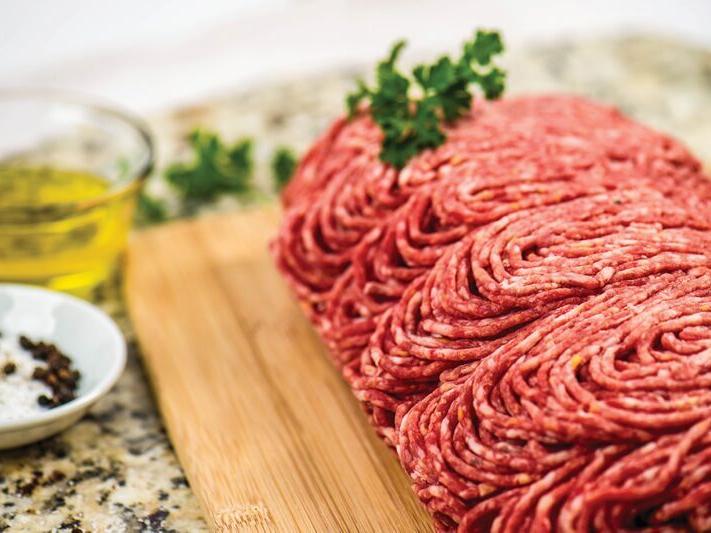
Seized bologna.
The discovery was made at approximately 6:26 p.m. when a U.S. Citizen from Sunland Park, New Mexico, presented himself for inspection at the Santa Teresa Port of Entry. During the inspection, CBP Officers discovered rolls of prohibited pork bologna concealed under the mats and seats of the front and rear passenger sides of the vehicle. A total of 30 rolls were discovered hidden throughout the floorboard.
The 277 pounds of bologna was seized and the driver was assessed a $1,000 civil penalty.
“Our CBP Officers diligently inspect all conveyances for contraband and prohibited agriculture products thereby safeguarding the United States from foreign animal diseases,” said Santa Teresa Port Director Fernando Thome, “We take pride in facilitating the legitimate travel and trade, to include protecting the nation’s agricultural industry.”
CBP provides a critical role in protecting the nations’ agriculture and reminds the public that all food products must be declared and are subject to inspection. Failure to declare agriculture products could lead to the seizure of products and a fine.
CBP’s highly-trained agriculture specialists are the front line in safeguarding America’s agricultural resources. On a typical day in Fiscal Year 2020, CBP agriculture specialists throughout the nation seized 3,091 prohibited plants, meats, animal byproducts, and soils and intercepted 250 insect pests.
Learn more about how CBP Agriculture Specialists protect the United States from dangerous pests and diseases that could hurt the country’s economic vitality.
The Masters of Beef Advocacy (MBA) program, managed by National Cattlemen’s Beef Association, a contractor to the Beef Checkoff, has launched updated advocacy training modules for MBA NextGen.
MBA NextGen updates the popular MBA training modules, making it easier than ever for a new generation of farmers and ranchers to share their stories and advocate knowledgeably for the beef industry with updated information and resources to help answer consumer questions, all accessible with the click of a mouse.
MBA NextGen continues to be a free, self-guided online course that provides farmers, ranchers, service providers, students, consumers and all members of the beef community with the tools and resources to become a beef advocate and answer tough questions about beef and raising cattle.
“The MBA program is one of the most effective tools we have to teach a wide audience the core principles of the cattle industry and has been a tremendous asset in our efforts to better inform consumers and thought leaders about our industry,” said Paul Dybedahl, manager, communications for the Masters of Beef Advocacy Program. “Whether you’re from a family of ranchers or a consumer simply wanting to know more about how that delicious beef dinner got on your plate, MBA NextGen can arm you with the information you need to be a strong advocate for the beef community and communicate with interested consumers.”
MBA NextGen consists of five self-guided online lessons.
1. The Beef Community: Context of raising beef from pasture to plate, focusing on the community of people involved throughout the beef life cycle.
2. Raising Cattle on Grass: An introduction to the first step in the beef life cycle and the many benefits of raising cattle on our country’s vast grass pasture resources.
3. Life in the Feedyard: A discussion on the role of feedyards, including animal care, nutrition and environmental stewardship, at this important step in the beef life cycle.
4. From Cattle to Beef: An in-depth look at the slaughter process and the humane handling and safety measures in place at today’s beef processing facilities.
5. Beef. It’s What’s For Dinner: A primer on choosing and cooking the right cuts of beef and the important role of beef in a healthful diet.
The MBA program started in 2009, and to date, there are more than 15,000 graduates. Once the lessons are completed, advocates gain access to a variety of continuing education resources including online courses that delve deeper into specific topics such as beef sustainability and nutrition, and in-person top advocate training. Graduates are also invited to join the Masters of Beef Advocacy Alumni Facebook group, a virtual community for graduates to ask questions and get connected to the latest advocacy resources.
If you’re anything like me and are fascinated by the concepts of productivity, efficiency and concentration to the point at which you end up wasting your time researching implementations of these concepts, then you’ve definitely heard of the Pomodoro Technique.
If you haven’t heard of the Pomodoro Technique, it’s a form of time management that requires you work for 25 minutes straight without any distractions, before taking a 5-minute break. You repeat this cycle four times and on your fourth break, you take a 20-minute break. Then, you return to the 25 to 5-minute ratio, and the cycle repeats. Many people swear by it and say that it changed the very rhythm of their daily lives. I wish I could say the same.
I’m someone who can either work for four hours straight or a mere 10 minutes before I get distracted. There is no in-between. So I tried out this technique, like many others, hoping that it would solve my relentless oscillation between working until I drop and literally being unable to sit down. I admit — for a while, the Pomodoro Technique was helpful. It made me sit down and say to myself, “Okay, all you need to do is work on this for 25 minutes.” But then, we went into quarantine, school was online and the studying and time management skills that I once possessed completely dissipated. Now, I’m left flailing in this whirlwind of assignment after assignment.
My first issue with the Pomodoro Technique is the restrictiveness of it. I don’t like this cookie-cutter ratio of 25 to 5 minutes. I would just be getting into the flow of writing an essay, when suddenly, the notorious “Radar” Apple ringtone starts blaring, rocking me to my core as it leaves me both startled and out of my rhythm. If I wasn’t startled by the ringtone and simply ignored it, I would continue to write. And then suddenly, three hours have passed and my brain feels dead. Thus, I’ve once again pushed myself to the point of mental exhaustion leaving me unable to finish that assignment or the many others that were due.
Then there are these 5-minute breaks. What’s up with that? What could I possibly do in 5 minutes that would leave me feeling satisfied? I found it weird to say to myself, “now relax for 5 minutes.” Either I would scroll through my phone (spending even more time on a screen) or I would completely lose track of time, only to realize an hour later, making me feel unproductive and unaccomplished.
Lastly, I don’t believe that every task is a 25-minute task. Working on a math problem set and writing an essay each requires different time limits that are individualized to our own needs. I became overwhelmed by this 25-minute interval. It made me either produce work as fast as I could just to get it done before the time limit (costing of the quality of the work) or lose concentration 15 minutes in and waste time until the alarm went off, fooling myself into believing that what I just accomplished was productive.
This is not to say that the Pomodoro Technique doesn’t work. For some, it really does perform miracles. But if you’re anything like me, or if you’ve tried it yourself and it left you feeling more anxious, know that you aren’t alone.
I’ve found that timing how long certain tasks will take me to complete allows me to determine how much time is realistic formeto work efficiently. Take breaks as needed, and it also might be helpful to plan things for each break.
It’s okay if you take a break for a little longer than you anticipated and it’s okay if you can’t work for 25 minutes. We all have our individualized limits, so find what’s best for you.
GlobalBeef and Chicken Fat (edible)Market Size, Status and Forecast 2021-2026
The Global Beef and Chicken Fat (edible) Market Research Report 2021-2026 is a valuable source of insightful data for business strategists. It provides the industry overview with growth analysis and historical & futuristic cost, revenue, demand, and supply data (as applicable). The research analysts provide an elaborate description of the value chain and its distributor analysis. This Market study provides comprehensive data which enhances the understanding, scope, and application of this report.
Get a Free Sample Copy of this Report: (Avail a Flat 30% Discount)
Colyer Fehr Tallow Pty Ltd., Cargill Incorporated, Saria Se and Co. KG, AAK, Ten Kate Holding B.V., Baker Commodities Inc., Darling Ingredients Inc., York Foods Pty Ltd, Edible Oils Limited (EOL) and Other
The leading players of Beef and Chicken Fat (edible) industry, their market share, product portfolio, company profiles are covered in this report. The leading market players are analyzed on the basis of production volume, gross margin, market value, and price structure. The competitive market scenario among Beef and Chicken Fat (edible) players will help the industry aspirants in planning their strategies. The statistics offered in this report will be precise and useful guide to shape the business growth.
Market Segmentation by Types:
Beef Fat
Chicken Fat
Market Segmentation by Applications:
Culinary
Bakery & Confectionery
Savory Snacks
R.T.E Foods/Convenience Foods
Others
Regional Analysis for Beef and Chicken Fat (edible) Market:
For a comprehensive understanding of market dynamics, the global Beef and Chicken Fat (edible) market is analyzed across key geographies namely the United States, Europe, China, Japan, Southeast Asia, India, Central & South America. Each of these regions is analyzed based on market findings across major countries in these regions for a macro-level understanding of the market.
Significant Features that are under Offering and Key Highlights of the Reports:
Detailed overview of Beef and Chicken Fat (edible) Market
Changing Beef and Chicken Fat (edible) market dynamics of the industry
In-depth market segmentation by Type, Application etc.
Historical, current and projected Beef and Chicken Fat (edible) market size in terms of volume and value
Recent industry trends and developments
Competitive landscape of Beef and Chicken Fat (edible) Market
Strategies of key players and product offerings
Potential and niche segments/regions exhibiting promising growth.
The research includes historic data from 2015 to 2020 and forecasts until 2026 which makes the report an invaluable resource for industry executives, marketing, sales, and product managers, consultants, analysts, and stakeholders looking for key industry data in readily accessible documents with clearly presented tables and graphs.
Finally, Beef and Chicken Fat (edible) Market report is the believable source for gaining market research that will exponentially accelerate your business. The report gives the principle locale, economic situations with the item value, benefit, limit, generation, supply, request, and market development rate and figure, and so on. Beef and Chicken Fat (edible) industry report additionally Presents a new task SWOT examination, speculation attainability investigation, and venture return investigation.
We Offer Customization on Report Based on Specific Client Requirement:
– Free Country Level analysis for any 5 countries of your choice.
– Free Competitive analysis of any 5 key market players.
– Free 40 analyst hours to cover any other data point.
Note: All the reports that we list have been tracking the impact of COVID-19 on the market. Both upstream and downstream of the entire supply-chain has been accounted for while doing this. Also, where possible, we will provide an additional COVID-19 update supplement/report to the report in Q3, please check for with the sales team.
About Us:
MarketInsightsReports provides syndicated market research on industry verticals including Healthcare, Information, and Communication Technology (ICT), Technology and Media, Chemicals, Materials, Energy, Heavy Industry, etc.MarketInsightsReports provides global and regional market intelligence coverage, a 360-degree market view which includes statistical forecasts, competitive landscape, detailed segmentation, key trends, and strategic recommendations.
Contact Us:
IrfanTamboli (Head of Sales) – Market Insights Reports
That’s why Democrats want to bring back pork in the form of “earmarks” after they were banned 11 years ago following several embarrassing scandals.
Leading the parade for the return of earmarks is Maryland Rep. Steny Hoyer (D), the House majority leader. Hoyer views them as advocacy tools for members of Congress and incentives to line up votes for major legislation. Quarrelsome Republicans, notably the Freedom Caucus, regard earmarks as illicit handouts that would empower Democrats.
In a broader sense, Hoyer is moving to reclaim the prerogative of dispensing pork to members of Congress that, since the abandonment of earmarks more than a decade ago, has passed to the White House as the purveyor of pork and the collector of IOU chits.
Frank A. DeFilippo
Pork is pork, by any other name, depending on who’s doling it out and whose district it benefits. In one congressman’s district earmarks are an essential public service, in another’s they’re just plain pork. Earmarks technically differ from pork in that they are specific projects. Pork is discretionary spending. But pork is pork, no matter how lean it’s trimmed.
Pork-barrel projects are traditionally part of the political system of rewards and punishments. It was how things got done.
Back when Lyndon Baines Johnson ruled America like a benevolent dictator, he used presidential powers and political favors to bend reluctant legislators to his imperial will.
Johnson established the nation’s space center at Houston as a favor to his home state and its congressional delegation. When a Texas ranching family wanted to dispose of a piddling 22,000 acres of land, the waterfront acreage suddenly morphed into Corpus Christi Naval Air Station.
Johnson passed the Civil Rights Act with help from Republican congressional leaders Everett Dirksen and Charles Halleck at God knows what cost to the treasury. He enacted Medicare by raising peanut import quotas to attract the support of hostile Southern legislators by protecting an important reginal agricultural industry against cheap, foreign imports.
And he chided a liberal anti-Vietnam War senator, Frank Church, who was cozy with the press, that the next time he needed a dam in Idaho he should call Walter Lippmann (the prominent syndicated columnist).
It used to be said that a good politician is one who stays bought. In the White House and on Capitol Hill, and in statehouses across the nation, pork was a great persuader. Pork and patronage, along with political bosses, are what made the complex system of governance tick like a Tag Heurer.
And no one since Franklin Delano Roosevelt, Johnson’s hero, was a better high-performing master of the system and all of its levers of power than Johnson.
Say what you will about the bossed-and-bought politics of yesterday, it certainly beats the ideological stand-offs that choke government today, and the limp leadership that can’t even gather enough votes to pass its own legislation.
This is no exercise in political taxidermy. It’s a comparison of how things got done when the system worked to everyone’s benefit. That is, until the elimination of the tools of the trade that greased the way for the otherwise creaky and vendible system to give lawmakers tangible rewards they could take home and crow about.
They were called earmarks, and pork — bridges, roads, dams, buildings, airports, post offices, parklands, jobs, military installations, contracts, leases, agencies, public transit, and whatever else a community or Congressional district might need that could, at the same time, boost the standing of its sponsoring lawmaker.
This was especially true in the 1950s-60s, when Baltimore City had a population of nearly 1 million and three Democratic congressmen of its very own who held three top House committee chairmanships that controlled tons of pork – George H. Fallon, Public Works; Edward A. Garmatz, Merchant Marine and Fisheries; and Samuel N. Friedel, Government Operations.
Ask yourself: Are we better off now than when pork and patronage oiled the system and political bosses made certain that elected officials did their jobs or face retribution at the polls? The answer depends on whether you prefer results, or transparency and paralytic government.
The sprawling Social Security Administration complex at Woodlawn, outside of Baltimore, didn’t wind up in Maryland because of climate or geography. And the NSA buildings at BWI-Thurgood Marshall Airport didn’t just land there by accident. Nor did the 16 other federal installations spread across Maryland tumble out of a thwacked piñata.
Baltimore’s aging Inner Harbor is mostly a generous bequest of the federal and state governments. During the presidency of Jimmy Carter, Urban Development Action Grants (UDAGs) flew through Baltimore like last week’s snowflakes. One visible reminder is the Inner Harbor’s house of mirrors, the Hyatt Hotel.
The Baltimore Metro system, the World Trade Center and the Convention Center were gifts from Gov. Marvin Mandel (D) to Mayor William Donald Schaefer, buddies from the clubhouse of political major domo Irv Kovens. The Edward A. Garmatz Courthouse and the George H. Fallon Federal Office Building were federal bonanzas and examples of prime pork.
The elimination of earmarks was gradual over a decade until they were finally banned as an embarrassment by then-House Speaker John Boehner (R-Ohio). An example that is often cited is their use by the late Rep. John Murtha, whose name is plastered on projects across his benighted Pennsylvania district.
Murtha built a state-of-the-art airport in Johnstown, population 20,000, which is 11 miles from Pittsburgh, which has its own state-of-the-art airport. Another is the bridge to nowhere in Alaska. And yet another is the use of public parkland, as pork, by Rep. Phil Burton, Democrat of California, to leverage votes.
At the time, Boehner described the ban of earmarks as a “critical step to restore public trust.” And in the process, Boehner destroyed his own speakership. He was forced to resign because he could no longer deliver the pork chop. Boehner’s successor as speaker, Paul Ryan, considered restoring earmarks, but he was soon gone, too.
The result of the ban is a non-performing Congress, though there are some loopy ideologues, such as members of the Freedom Caucus, the far-right successors to the tea party, who couldn’t be budged with a bulldozer. Restoring the euphemistically camouflaged form of patronage – a legalized and highly productive method of bribing lawmakers for their votes – is illegal in the marketplace but perfectly acceptable in Congress.
Naughty or nice in Annapolis
In the Maryland State House, the guidebook to which legislators have been naughty or nice is the annual Capital Budget, the index to proposed bricks-and-mortar projects. In it are found the pork-barrel projects the governor is dispensing either as current reward, or down payment on future votes, to pliant legislators.
An illustration of what the state’s Capital Budget can bring.
There are listed such items as duck decoy museums, local theaters and galleries, arts group projects and, of late, the social needs – but with a cautionary non-religious wink – of Black churches across Maryland. These include social halls, outreach facilities, shelters, and recreational facilities, projects that cannot be identified as having religious significance.
From the state’s Capital Budget to Baltimore, for example, came the Hippodrome Theater, the Meyerhoff Symphony Hall, and the Reginald F. Lewis Museum as well as partial funding of Center Stage.
Add to the missing link of greasing the system the mighty dinosaur political machines – the Daley machine of Chicago, the Greene machine of Philadelphia, the Lawrence machine of Pittsburgh, the Pollack, and later the Kovens, machines of Maryland, the (Harry) Byrd machine of Virginia, the other (Robert) Byrd machine of West Virginia, the earlier Brown (father of Jerry Brown) machine of California, and all of the other urban political organizations of another era, and they could summon up enough votes on Capitol Hill to deliver a president’s legislative package bedecked with ribbons and votes to spare. (You can bet that when Johnson needed votes, he didn’t call the Senate chaplain.) Members of Congress usually owed their jobs, in part, to the political bosses back home who turned out the vote on election day.
To be historically correct, the gradual fade-out of political organizations actually began with the New Deal and FDR and the wholesale use of pork and patronage. To ease the pain of the Great Depression, government began adopting social welfare programs that assumed the functions of the pollical machines and precinct organizations – food baskets at holidays, help with heating costs, legal assistance, patronage jobs. They were replaced with massive public works projects – pork – to provide jobs as well as infrastructure improvements. (The Ambassador apartment building in the Tuscany-Canterbury section of Baltimore was built by the WPA during the Great Depression.)
And continuing into the revolutionary 1960s, government began to subsidize activist community and neighborhood organizations, that, more often than not, challenged and defeated machine-sponsored incumbents and candidates. Government, in a sense, bit the hands that fed it.
For officeholders of both parties, the first law of politics is survival. And especially for endangered Republicans, who can’t decide between Trump and other limited options, restoration of earmarks might be the safest way to stay alive, with visible payoffs for the folks back home. Earmarks benefit constituents and communities as well as their sponsors.
Do you ever ask yourself, "what is their endgame"? What do these people that protest everything, have no new ideas except to defund the police, want their world, our world to look like?
Illinois just signed into law no cash bail. Catch-and-release right here at home. What is the point? How are we going to get new young officers to join the force? So many questions and no answers. They can’t be that naïve in thinking that this is going to make us safer. Their job is to make us safe, keep us safe, and to not put us in harm’s way. I would love a quick little tutorial on how life is going to look.
All the talking heads are spouting off about the COVID relief stimulus bill. However, little has been said about the “pork” contained in the $1.9 trillion plan. There is currently $112 million allocated to the Bay Area Rapid Transit expansion — you know that massive bastion of coronavirus breakouts. How about $1.5 million for the Seaway International Bridge connecting New York to Canada? Another dangerous COVID-19 zone? Or is Nancy Pelosi from the Bay Area and Chuck Schumer from New York? Answers on a postcard please.
The bill does provide $473 billion in payments to individuals, $75 billion for vaccines, $26 billion to bars and restaurants, $15 billion to help the airlines and finally $7.2 billion for the Paycheck Protection Program funding small businesses. At least we know that someone, somewhere had their priorities straight.
This is supposed to be a $1.9 trillion stimulus relief package. I have said it before, but $1 trillion is a lot of money and our legislators, both Democrats and Republicans, throw it around like a nickel, not a manhole cover. If viewed as seconds on a clock, 1 million consecutive seconds equals 12 days, a billion consecutive seconds is 31 YEARS. A trillion consecutive seconds is 31,688 YEARS.
Yes, you read that right, years. One trillion seconds ago we had Neanderthals roaming the plains of Europe. So, back to the numbers. The Wall Street Journal editorial board has estimated that only $825 billion was directly related to COVID-19. That means that the rest — just over $1 trillion — is PORK. There's $470 million to museums and libraries. I love them both but are they critical to this package? Do they help with COVID? The money basically doubles their existing budgets.
There is $350 billion allocated to bail out the 50 states and District of Columbia. The government's allocation formula is based on the unemployment rate in the fourth quarter of 2020. Yep, you guessed it. The stubborn lockdown states that had higher unemployment will be rewarded. Your tax dollars are going to bail out California, Illinois, and New York for their draconian conduct while Florida and South Dakota get less. It's just a bunch of pork barrel porn.
Oh, and then there is this — $128.5 billion to fund K through 12 education. C’mon man. They are not even in school anyway. And speaking of school, there is an idea in the bill to bail out some of this student loan debt. The president wants to forgive $10,000 while his progressive left wants it to be $50,000. What a bunch of malarkey that is. Look, I have some family members with student loans. I get the fact that they are cumbersome. So is my mortgage payment, car payment and health insurance – not to mention any credit card debt that I may or may not have. That is what adult people have – they are called bills. But To bail out people that went into the loans with their eyes wide open I think is wrong. Wrong because there are a lot of hardworking parents out there that didn’t take a vacation for 10 years, worked two jobs for 10 years and always took the overtime for 10 years so their kids didn’t have to take out a student loan. And conversely, I know parents who went on multiple vacations over the years, bought bigger houses and nicer cars and had their kids take out student loans. What type of behavior does the government want to reward here? I have a better idea, if it was up to me, I would get the government out of the market of loaning money for schools and make the actual overall price of college come down, way down. It is a crime that these schools have billions in endowments yet continually hike their fees year in and year out. And now, you don’t even get in class learning for your money. What a joke. The whole charade is a farce.
We have a handful of states that have lifted the mask mandate. Now Fauci can’t say that if your parents have the vaccine and your children have the vaccine whether Grandma and Grandpa can hug their grandchildren. Where is the leadership? That leadership that got our kids back in school – wait what? Didn’t happen. Is anybody as frustrated and angry with the teachers as I am? Now there are reports that some districts across the country will not be back to 5 days in person learning until the fall. I am appalled. I was watching the movie "Saving Private Ryan" over the weekend. What struck me most was the strength that our young men and women had in the face of the evil empire. They were 19 and 20-year-old kids that were fighting an unknown enemy for an unknown period of time. They didn’t know when they got to go back home to Iowa. Heck, they didn’t know if they got to go back at all. But they answered the call. They stepped up, they stood tall, even with carnage all around them. That is bravery. That is courage. There were no desks to hide under. There was no lavender infused oxygen pod to escape to. I wish I could see just a glimpse of that bravery and courage when it comes to teaching our kids. I wish I could see more of the freedoms they fought for when it comes to my health and the restaurants I want to dine in. I guess the biggest take away I have from the last 52 weeks of this pandemic is how easy it would be to invade and takeover America now. Our brave young men and women from WWII would be very disappointed.
Scott Shellady is a financial markets commentator. He can frequently be seen on Fox Business, Bloomberg, CNN and TD Ameritrade. He is a broker with AG Optimus here in the Midwest and an adjunct professor of finance at DePaul University. Shellady lives in Portage, and can be found on Twitter at @ScottTheCowGuy. The opinions are the writer’s.
This content was contributed by a user of the site. If you believe this content may be in violation of the terms of use, you may report it.