Rechercher dans ce blog

Tuesday, June 29, 2021

New legislation on pork labelling in Italy - Pig Progress

meat.indah.link

Italy will soon introduce new legislation on the national labelling of pork products. It is related to levels of animal welfare and sow breeding conditions.

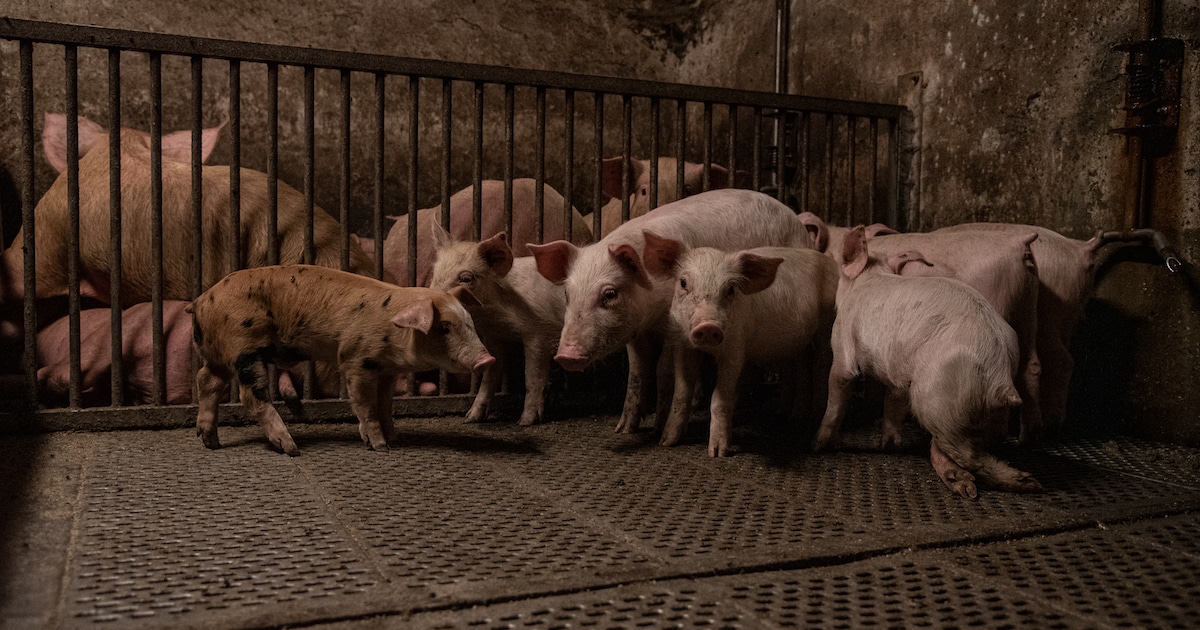
One bill has been approved into law with implementation to begin in July 2021. The new regulations stem from pressure in Italy to make information about pork products and other meat products clearer. Some in Italy feel that current product labels can be misleading for consumers with regard to breeding methods (such as the use of farrowing crates) and other aspects of animal welfare.

Various traditional pork products for sale at a shop in Rome, Italy. They may soon carry a label informing customers about the product’s background. - Photo: Shutterstock

Various traditional pork products for sale at a shop in Rome, Italy. They may soon carry a label informing customers about the product’s background. - Photo: Shutterstock

Harmonising pork labelling systems

In July 2020, the Italian parliament approved Law #77. Maurizio Gallo, director of the Italian pig industry organisation Associazione Nazionale Allevatori Suini (ANAS), explained that with this law, the ‘Sistema Qualità Nazionale Benessere Animale (SQNBA)’ comes into effect. The SQNBA harmonises several voluntary pork product labelling systems relating to the welfare, biosecurity and use of antibiotics in Italian livestock. “In the next months, a ministerial decree will be issued for ruling on the certification methods,” Gallo said.

“It is expected [to be] a scheme for every species and category (for instance in the pigs: farrowing and fattening stage, outdoor and indoor) and the ‘ClassyFarm’ system of the health ministry will have to be used. Then, all who are interested to label pork in Italy for welfare [that is, making claims in the use of production practices that relate to animal welfare] will have to comply at least to the minimum standard established by SQNBA.”

Second bill on pork product labelling

Against the background of this initiative, another bill (no. 2403) was presented in 2020 by animal rights groups Compassion in World Farming (CIWF) Italia and Legambiente, and was supported by a representative from Italy’s Free and Equal party (LeU) and integrated pork producer Fumagalli Industria Alimentari. The latter has focused on producing cured pork products from pigs raised to high welfare standards for years.

In April 2021, a similar labelling system was proposed for dairy products in Italy based on type of milk production and related animal management practices. In total 5 production levels were proposed, ranging from organic to intensive.

‘Labelling scheme too superficial’

CIWF Italia director Annamaria Pisapia is critical of Law 77. In her view, the labelling scheme is too superficial, with only one indoor production category and a free-range production category. She therefore argued that the law penalises the farmers who are already farming with better indoors standards, as they will be ‘put in the same pot’ with farmers that do basically intensive production. That also means, she said, that farmers who have already stopped tail docking would be categorised with those that still use the practice. In addition, CIWF Italia would like the law to address the use of sow gestation crates.

The Link Lonk


June 29, 2021 at 02:07PM
https://ift.tt/2TasahC

New legislation on pork labelling in Italy - Pig Progress

https://ift.tt/2RsHZwT
Pork

Monday, June 28, 2021

LIVESTOCK-Hog futures rally as China buys pork - Successful Farming

meat.indah.link

CHICAGO, June 28 (Reuters) - Chicago Mercantile Exchange hog futures rose 3% on Monday, supported by rising demand as China moved to buy pork for its reserves to shore up the domestic market, traders said.

China's state planner said on Monday that central and local governments will start buying pork for state reserves to support prices, even after prices rebounded sharply from a two-year low last week.

CME August hog futures, the most actively traded contract, ended up 3 cents at 102.775 cents.

The wholesale U.S. pork carcass cutout price rose $5.09 to $115.13, according to U.S. Department of Agriculture data. <PRK-MAN-CARCS>

Profit margins at pork processors weakened. Packers were facing a loss of $33.55 per head, compared with a loss of $25.19 on Friday, according to Denver-based livestock marketing advisory service HedgersEdge.com LLC.

August live cattle futures settled 1.2 cent lower at 121.6 cents per pound. CME August feeder cattle ended down 3.2 cents at 156.35 cents per pound.

The USDA quoted the choice boxed beef cutout value at $297.43 per cwt, down $7.13 from Thursday, and the select cutout dropped $2.22 at $273.96 per cwt. <BEEF-US-CH> <BEEF-US-SE> (Reporting by Mark Weinraub; Editing by Dan Grebler)

© Copyright Thomson Reuters 2021. Click For Restrictions - http://about.reuters.com/fulllegal.asp

The Link Lonk


June 29, 2021 at 03:22AM
https://ift.tt/3y1OAQB

LIVESTOCK-Hog futures rally as China buys pork - Successful Farming

https://ift.tt/2RsHZwT
Pork

Danish Activists Sue Pork Giant Danish Crown Over Climate Slogans - Sentient Media

meat.indah.link

Last year, Europe’s biggest meat processor and the world’s largest pork exporter Danish Crown launched what it described as its “biggest advertising campaign ever.” On TV, newspaper ads, the radio, and billboards across Denmark, the company announced that “pigs are more climate-friendly than you think” and put pink-green stickers on its pork products, referring to pigs slaughtered by the company as “climate-controlled.”

Faced with immediate criticism from consumer organizations accusing Danish Crown of greenwashing, it stopped promoting the first slogan. The company, however, is still using the “climate-controlled pig” claim even after three complaints, including one from Greenpeace Denmark, reported the campaign to the Danish consumer protection agency.

Following Danish Crown’s refusal to withdraw the slogan, three Denmark-based non-profit organizations, the Vegetarian Society of Denmark, the Climate Movement, and the green student movement Den Grønne Studenterbevægelse, have jointly filed Denmark’s first climate lawsuit against the pork producer.

Greenwashing accusations

Rune-Christoffer Dragsdahl, general secretary at the Vegetarian Society of Denmark, regards the term “climate-friendly” as misleading because pork would still be more climate-damaging than plant-based products even if the meat industry managed to cut emissions significantly. “When consumers believe that ‘Oh, there is such a thing as more ‘climate-friendly meat!’ then it becomes more difficult to change consumer patterns,” Dragsdahl says. “It’s muddying the whole debate.”

In response to the looming lawsuit, Danish Crown’s Communications Director Astrid Gade Nielsen stated that the company does not plan to withdraw the campaign. “We believe that the program that forms the basis of the ‘climate-controlled pig’ campaign is reasonably robust,” Nielsen said, “as all pig shareholders in Danish Crown have committed to reducing their CO2 footprint by 50 percent by 2030.”

Kristine Clement, campaign lead of agriculture and forest at Greenpeace Denmark, describes Danish Crown’s campaigns as “a clear case of greenwashing” and urges the company to withdraw them immediately. “Danish Crown is fooling the public and delaying the necessary transition of how we produce and consume food to protect their own market,” Clement says. “Instead, we need to reduce Denmark’s record production of meat and scale up on plant-based food to meet our national climate targets and global commitments.”

Danish Crown’s emissions

Livestock production in Denmark is a striking example of large-scale meat producers impeding national climate targets. According to a new study by New York University researchers, Danish Crown’s greenhouse gas emissions are currently equivalent to 29 percent of Denmark’s carbon footprint and will be responsible for 42 percent of its emissions allowed under the Paris Agreement by 2030 if current meat consumption trends continue.

On its website, Danish Crown claims that it’s striving to become “the world’s most sustainable and successful meat producer” by 2030 and that Danish farmers have already reduced the carbon footprint of pork sold by Danish Crown by 25 percent since 2005. This claim, however, is based on an Aarhus University study commissioned by Danish Crown that environmental experts have criticized for not including emissions caused by indirect land use.

“According to the UN, indirect land use accounts for approximately 11 percent of the total climate impact globally and can account for approximately 50 percent of the climate footprint of food production,” says life cycle assessment expert Jannick Schmidt from Aalborg University. “If you omit indirect land use, you paint a false impression of a product’s total carbon emissions.”

The pork report used by Danish Crown to back its climate claim isn’t its first controversial cooperation with the University of Aarhus. In 2019, Aarhus University withdrew a study about the climate impact of beef when an investigation found that Danish Crown and Landbrug & Fødevarer, a Danish agricultural industry group, had influenced and co-written the report.

Livestock’s climate impact

Livestock production in Denmark is one of the world’s most striking examples of how large-scale meat production threatens climate targets. With 62 percent of its land used for agriculture, Denmark is one of the most cultivated countries in Europe, and according to a report by six Danish sustainability organizations, 80 percent of Denmark’s agricultural land—half of the entire country—is used to grow fodder for farmed animals.

While the Food and Agriculture Organization’s (FAO) estimate that livestock production accounts for 14.5 percent of human-caused emissions continues to prevail in discussions about livestock emissions, environmental campaigners, as well as scientists, are increasingly pointing to the carbon opportunity costs of animal agriculture. As the example of Denmark shows, industrial animal agriculture covers large areas of land that cannot be used to regrow natural vegetation that binds more carbon in the soil than agricultural land.

Creating legal precedent

 According to Clement from Greenpeace, Danish Crown plans to roll out the “climate-controlled pigs” campaign in Sweden, Germany, and Poland too. But like the recent climate trial against Shell that resulted in a Dutch court ordering the oil giant to deepen its greenhouse gas emission goals, the lawsuit against Danish Crown could create a legal precedent.

Clement hopes that the legal action taken against Danish Crown will curb the company’s greenwashing activities. “If we stop this campaign in Denmark,” she says, “we can stop them from using the same misinformation campaign in other markets as well.”

In addition to reigning in Danish Crown, Dragsdahl from the Vegetarian Society of Denmark wants the lawsuit to discourage other meat companies from greenwashing campaigns. “This is spreading more and more in other countries as well, all sorts of greenwashing claims on products,” he says. “Someone has to draw a line in the sand before this gets out of hand and just becomes completely confusing for consumers.”

He regards the fact that Denmark’s first climate lawsuit involves a meat company as “very fitting.” While the Danish government has established a clear course of action for industries such as transportation and energy to reach Denmark’s 2030 climate target, Dragsdahl explains, politicians have yet to reach a deal that addresses agricultural emissions. “They keep delaying and delaying it,” he says. “It appears like agriculture, or more specifically, that animal agriculture is getting a special treatment while all other sectors have to pay the price and adjust.”

The Link Lonk


June 29, 2021 at 03:19AM
https://ift.tt/3qzteaI

Danish Activists Sue Pork Giant Danish Crown Over Climate Slogans - Sentient Media

https://ift.tt/2RsHZwT
Pork

Tipton County Pork Festival returns in September - WTHR

meat.indah.link

TIPTON COUNTY, Ind. — The Tipton County Pork Festival will return for its 53rd year on Sept. 9-11.

The festival is expected to have a full lineup of entertainments beginning Thursday, Sept. 9, with the annual kickoff parade that begins at 5:30 p.m.

During the event, festival-goers will be able to pig out on their favorite pork chops, pork burgers, ribs, pulled pork and bacon burgers.

There will also be a Tipton County Port Festival Pageant. The pageant committee has created a new pageant for girls in their "in-between" ages. Eligible ages for the junior miss competition is 10-12 years old.  

The festival will conclude on Saturday, Sept. 11, with a grand parade at 2 p.m. 

Brice Delph, the festival's vice president, said the festival committee is working with authorities to ensure the festival is safe for all people to attend. 

The Link Lonk


June 29, 2021 at 04:43AM
https://ift.tt/3y3VvJb

Tipton County Pork Festival returns in September - WTHR

https://ift.tt/2RsHZwT
Pork

Beef Consumption in the US: Is It Increasing or Decreasing? - Sentient Media

meat.indah.link

Happy cows living in sanctuaries wander, swing their tails, form strong friendships, groom each other, enjoy intellectual stimulation, prefer salty and sweet foods, empathize with each other, and take care of herd members who are sick. The vast majority of cows in the United States, meanwhile—about 41 million cows were being raised for beef and dairy in 2019—are unable to enjoy most of these activities, especially as they only live to be about 14 to 16 months old, less than a tenth of the expected lifespan of a cow living in an animal sanctuary. But how did cattle farming become like this, and what might the future hold for beef consumption in the U.S.?

The History of Meat Consumption in America

The history of eating meat in America begins with hunted meat. This predates the arrival of the settler colonialists who created a system of white supremacy, within which the story of meat-eating became primarily one of stealing American Indian land, raising cows on that land, and the consumption of domesticated meat. 

In the 20th century, meat consumption has also been heavily tied to farming innovations. Innovations in industrial agriculture changed how animals were raised for the market. For example, after World War II, farmers began using antibiotics to prevent the spread of disease among animals living too close together. Cows spend their lives in cramped and unsanitary conditions where they must often endure the pain of having their tails removed.

The resulting efficiency of the meat production system also came with a price of hazardous conditions for low-wage workers. Slaughterhouses tend to hire Black, Latino, Asian, and both undocumented and documented immigrant workers for dangerous, trauma-inducing, non-unionized work. Farmers who raise cattle that are sent to slaughter also struggle to make money from their labor.

Whether eating chickens, cows, or pigs, humans became further and further removed from the individual animals they were eating—both physically and in terms of their knowledge, writes Connie Johnston in Political Ecologies of Meat. 

How Much Beef Does the Average American Eat?   

The average American eats about 55 pounds of beef per year, based on 2019 USDA Food Availability data, a proxy for food consumption. Since the USDA began keeping statistics, the average amount of beef consumed per capita rose from 32 pounds per person in 1932 to 88.8 pounds in 1976 and has since steadily fallen. 

Meat Consumption in the U.S. Over Time   

Meat consumption in the U.S. has roughly mirrored the rise and fall of beef consumption in the last century, with a low of 76.9 pounds of red meat per person in 1935 rising to a high of 136.1 pounds in 1971. From 1971 to 2019 Americans reduced their red meat intake to about 105.2 pounds per person. 

The graph below shows the per capita consumption of beef and red meat in the U.S. from 2009 to 2019, using data from the USDA.

In 2019, beef comprised more than half of all red meat consumption in the U.S.

Which U.S. State Consumes the Most Beef?   

While the USDA calculates beef consumption per capita nationally, it does not hold such data by state. Among the five states that the U.S. Bureau of Labor Statistics tracks, Texans spent the most on beef products, and more than the average U.S. resident. Hamburger consumption in Nevada has been found to be higher than in most other states. Meanwhile, among cities with the highest consumption of meat in the U.S., Philadelphia has been ranked first. 

Which Country Consumes the Most Beef?   

Argentina outpaces all other countries in beef and veal consumption per person, at 36.9 kilograms (81.4 pounds) annually, compared to the U.S.’s second-place consumption rate of 26.1 kilograms (57.5 pounds).

Why Do Americans Eat So Much Beef?   

The domestication of animals for meat arrived in what is now the U.S. with settler colonialism and is directly linked to the displacement and genocide of Indigenous populations, and the decimation of bison. Meat-eating in Europe had been reserved for wealthy people. Colonists brought cows, pigs, chickens, and other livestock from Europe to raise on land stolen from `Indigenous people. As it became more accessible and affordable to more and more settlers, beef became a staple of the American diet.

Since the 19th century, meat production in the U.S. has become increasingly industrialized, resulting in factory farms that produce fast-growing cows who live in crowded and restricted spaces. Cows are fed corn, soy, and grains and are given hormones that cause them to grow quickly. From those farms, slaughterers and processors turn the cows into different forms of meat which are prepared and packaged for grocery retail and food service—from ground beef to steaks: dried, frozen, canned and chilled. 

Is Beef Consumption Increasing or Decreasing?   

Since the late 1970s, beef consumption in the U.S. has declined, in part due to consumer concerns about the health impacts of eating too much red meat. Instead, Americans are eating the more affordable chicken.

Beef Consumption After the Pandemic

As COVID-19 spread—and killed at least 20 workers from meatpacking plants in the Spring of 2020 before ultimately causing the deaths of a further 600,000 people in the U.S.—beef consumption seems to have fallen to 13.2 billion pounds nationally, down from 13.9 billion in 2019. People also began purchasing more of their beef from the grocery store than from restaurants and other food service venues. 

How Much Beef Is Wasted in the U.S.?   

About one-third of food is wasted in the U.S., and meat tops the list by value. In 2010, 161.6 billion dollars’ worth of food went uneaten, of which about 30 percent was meat, poultry, and fish. Vegetables (19 percent) and dairy products (17 percent) were the other top contenders. Given the dominance of beef consumption in the meat industry, billions of pounds of beef are likely wasted in the U.S. each year. 

There are many ways that beef is wasted. It can be damaged due to packaging, storage, spoilage, or may not pass food safety inspections. It can also be overstocked at stores or not be purchased because of how it looks to grocery store shoppers. At home, people may overestimate how much food they need and make too much food, or they may throw away uneaten food because of food recalls, or concerns about whether the food is expired.  

What Would Happen if Everyone Ate Less Beef?   

If everyone ate less beef, fewer cows would be painfully branded and bred for slaughter. Public health might also improve for us humans if we ate less meat—with fewer outbreaks from eating contaminated meat, reduced levels of obesity, longer life spans, and fewer chronic diseases like cancer, diabetes, and heart disease.

With reduced farming of cows that are given large amounts of antibiotics, leading to spreading antibiotic resistance in bacteria, people might have a better chance of surviving bacterial infections. Less corn, soy, and other feed would be raised for cows, the amount of methane and carbon dioxide pollution would be reduced, and water in rivers and throughout ecosystems would be replenished. Biodiversity might also increase as a result of reduced denuding of land for cattle grazing. 

Finally, there would be a significant impact on the food system. People could sink their teeth into a falafel sandwich with greater assurance that their proteins are not directly linked to slavery, compared to if they had chosen to eat a typical cheesesteak or hamburger. 

What Can You Do To Help?   

Give yourself a pat on the back for taking the time to inform yourself about the consumption of dairy and beef in the U.S. Here are some additional resources as you consider how you can help solve some of the ethical, social, environmental, and political problems raised in this article:

  • Food Empowerment Project’s Food Chain Newsletter offers an overview of the beef industry, from the life of the cow to the environmental and human costs.
  • Factory Farming Awareness Coalition’s blog features efforts to help livestock farmers transition away from the factory farms that raise most cattle in the U.S. 
  • Heed the perspectives of Black and Indigenous activists seeking to decolonize the food system, as written about in this article. 

Are we missing something? Let us know how we can make this article better.

The Road Ahead

The story of how beef is consumed in the U.S. often omits the experiences of cows or the people who labored to raise and slaughter them. Beef has been separated from its origins by a powerful supply system, which activists are seeking to undo because of its harms to communities, animals, and the environment.

The Link Lonk


June 26, 2021 at 02:06AM
https://ift.tt/3qvXiUX

Beef Consumption in the US: Is It Increasing or Decreasing? - Sentient Media

https://ift.tt/2RxTDX4
Beef

Tyson beef plant earns water conservation certification - Meat & Poultry

meat.indah.link

SPRINGDALE, ARK. – Tyson Foods Inc. announced its Finney County, Kan., beef plant’s water conservation efforts resulted in the facility being the first in the industry to be certified as part of the Alliance for Water Stewardship by meeting standards verified by SCS Global Services (SCS), a third-party certification company. The certification standards implemented indicate the plant’s successful achievement of water stewardship requirements that are measured by water governance, quality, sustainable balance, safety and sanitation.

By reducing its water intensity from 0.90 gallons per lb (of beef produced) to 0.85 gallons, the plant’s water efficiency improved by 4.8% from 2019 to 2020, while reducing water usage companywide by 7.7% since 2015.  

Dennis Jones, complex manager at the Finney County facility, said the certification is affirmation of the company’s planned efforts to conserve natural resources.

“We are proud of our work to implement water stewardship practices in Finney County and our recent certification under the Alliance for Water Stewardship standard is a true testament to our commitment of securing the future of water at the plant and in the community,” he said. “This work is extremely important and we aim to safeguard water resources for residents through our efforts and contribute to the long-term development of the local community.”

The company developed and implemented its water stewardship program after interpreting data to identify water challenges and then evaluating the results of the applied stewardship plan in terms of water efficiency and overall usage. The campaign involved working with business and community members as well as government officials to establish water conservation goals while focusing specifically on monitoring water usage, wastewater management and minimizing water pumped from the county’s aquifer to conserve it for essential community purposes.

“Making clean water available for drinking and washing is at the forefront of our safety efforts and will continue to be a priority for all Tyson locations,” the company said.

“AWS certification distinguishes Tyson Foods as a global leader in water stewardship and demonstrates its commitment to excellence in water governance and conservation,” said Rae Mindock, SCS Global Services’ program manager of water certification.

The Link Lonk


June 28, 2021 at 11:29PM
https://ift.tt/3jsLcu7

Tyson beef plant earns water conservation certification - Meat & Poultry

https://ift.tt/2RxTDX4
Beef

How to make the high cost of ground beef easier to swallow - McDonough Voice

meat.indah.link

The U.S. Bureau of Labor Statistics' latest official data says in April 2021, the average price of a pound of lean ground beef climbed to a whopping $5.97 per pound. It's no secret that in the past year, we've seen all kinds of economic turmoil sending us into a season of inflation, when the price of everything is soaring.

If you and your family are not ready to turn vegetarian — nor are you prepared to pay a king's ransom for quality hamburger — you do have another option: Get creative. OK, maybe a little sneaky, too.

But first, let's talk turkey — I mean, ground beef. The really lean option of ground beef, 93/7, is not easy to prepare well. That's because there's not enough fat in it to turn out juicy, delicious fare. Super lean ground beef requires careful seasoning as well as careful cooking.

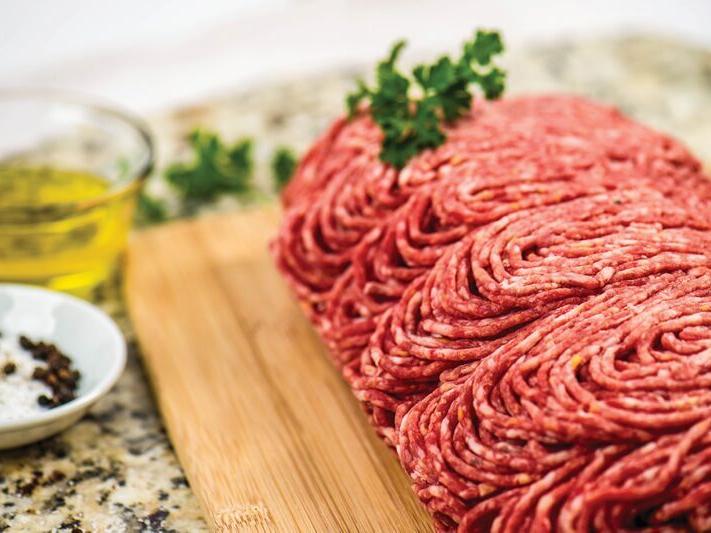
Let's say that you, like me, prefer organic, 90/10 lean ground beef. Yesterday I paid $5 per pound at my supermarket, on sale. Yikes! But I didn't really pay that. My effective cost is more like $3.24 per pound. How? Please don't tell a soul: I stretch it. I take the best quality ground beef and then "extend" it by at least one-third. So whatever the price in the store, I mentally reduce it by 33% to get my effective cost.

How to stretch ground beef

Sounds horrible, I know. But it's not. By mixing in something with the ground beef to make it go further, I get results that are so much better than the beef alone. I'm always doctoring, seasoning, adding this or that depending on what I'm making.

Take meatloaf, for example. I wouldn't be surprised if just the word "meatloaf" makes you respond with a resounding, "Yuck!" That's because a brick of ground beef stuck in the oven with a little salt and pepper is going to turn out dry as shoe leather, and about as tasty.

But take that same amount of ground beef and mix it with a few well-chosen ingredients, and then bake it up or put it on the grill. You are going to be amazed. Even your children are going to say it's great and ask you to do that again. And again.

Just don't be so anxious to tell your secrets. There's something about adding stuff to ground beef that grosses people out.

Rice

When browning ground beef for anything like tacos, chili or sloppy Joes, add one cup of cooked rice for every pound of meat, just after draining the grease. Your family will never know. The rice (brown or white) takes the seasoning very well so that it looks like it is all ground beef.

Potato

Add grated potato or dry potato flakes to hamburger meat for any Mexican dish like tacos or chili.

Bulgar wheat

Cook it first in water until soft according to label instructions. Then add to any recipe calling for ground beef and tomato sauce, reducing the amount of ground beef you use to accommodate the addition of the bulgur wheat. Shhh! I've been known to go 50/50 cooked bulgur to ground beef. That means 1/2 pound ground beef where the recipe calls for 1 pound.

Pureed vegetables

Roast them first, and then puree in the food processor or blender. Add one cup per pound of ground beef.

Fillers

Add 1/2 cup of precooked lentils, kasha, quinoa or beans to the raw ground beef. Now cook it just as if you would if it were all ground beef.

Stale bread, crackers

Tear up old bread or crackers into crumbs. Add an egg and spices to make meatballs and burgers.

Turkey

Ground turkey is very lean and often lacking in flavor. And it's dry. Mix 50/50 with ground beef for fabulous results.

Meatloaf

You can find my family's all-time favorite recipe for meatloaf at everydaycheapskate.com/groundbeef. This is the way your grandma made it; trust me on this. This is the recipe that made the house smell great, that went perfectly with mashed potatoes and that you knew you could eat every day of your life and never get tired of it.

This is the recipe that will make your family hope and pray there will be leftovers for tomorrow. If you follow this recipe well, the kids will never know you used bread, carrots and cheese to turn 1 1/2 pounds of ground beef into something closer to 3 pounds!

The Link Lonk


June 29, 2021 at 04:41AM
https://ift.tt/3w2yh4R

How to make the high cost of ground beef easier to swallow - McDonough Voice

https://ift.tt/2RxTDX4
Beef

Featured Post

Monterey Beef Rice Skillet | Food & Recipes from the Farm | lancasterfarming.com - Lancaster Farming

meat.indah.link Ingredients 1 pound hamburger 1 cup uncooked rice 2-1/2 cups water 1 onion, chopped 1 teaspoon salt 1 pint tomato ...

Popular Posts